Last updated November 22, 2026
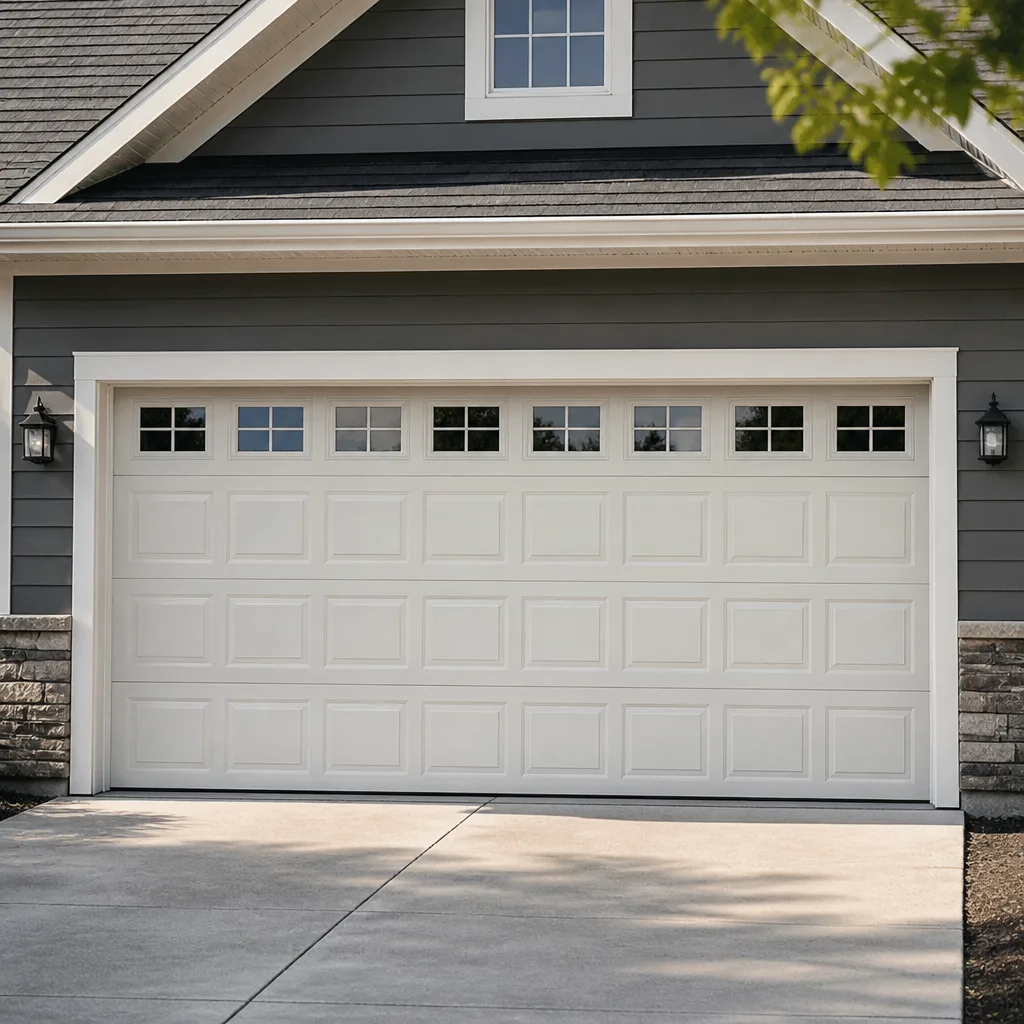 Raised-panel steel
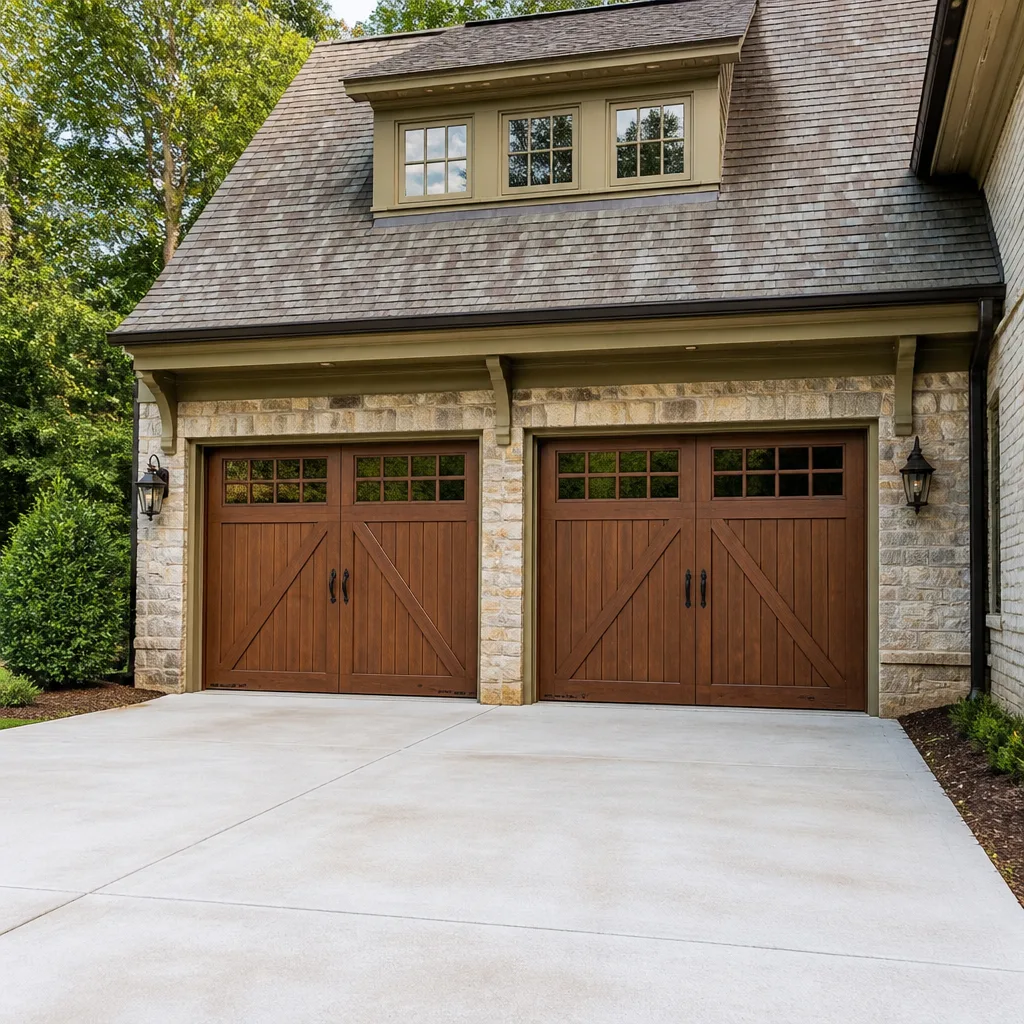 Carriage house
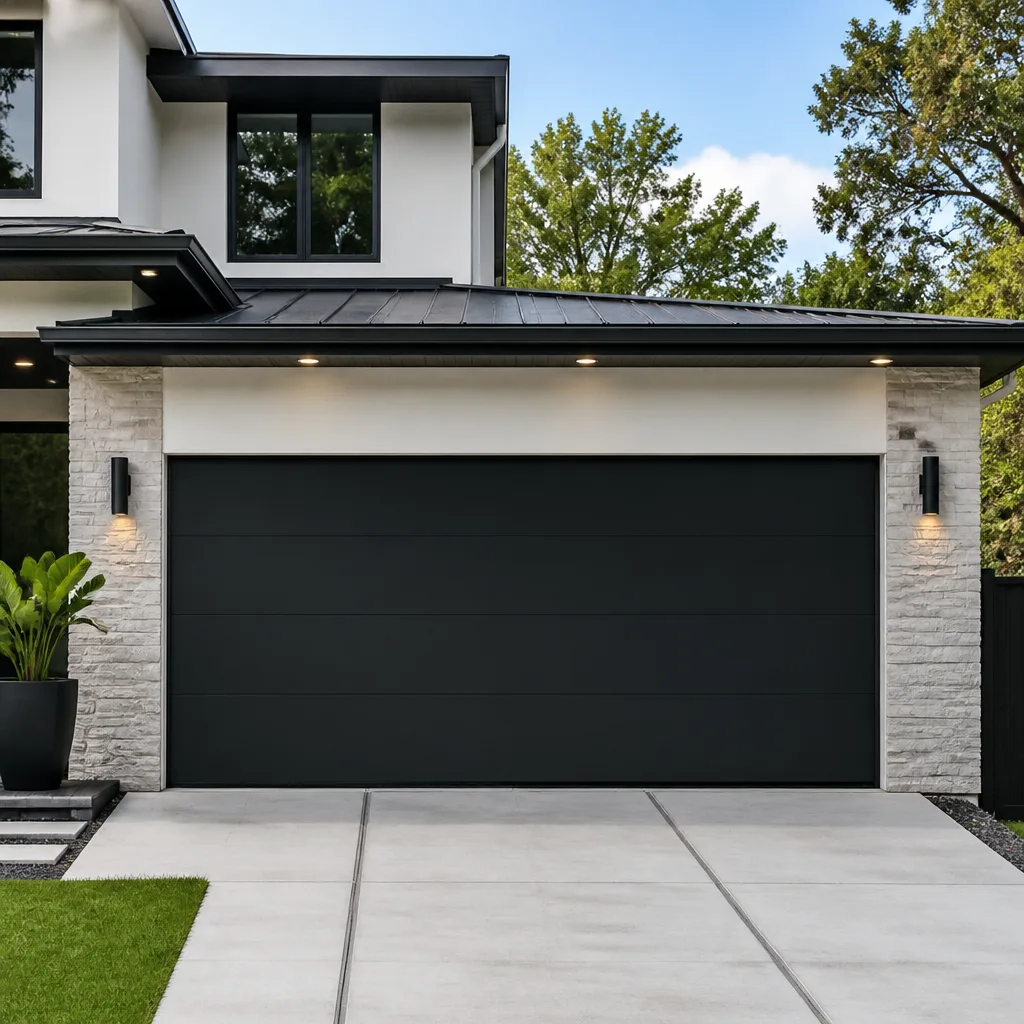 Modern flush
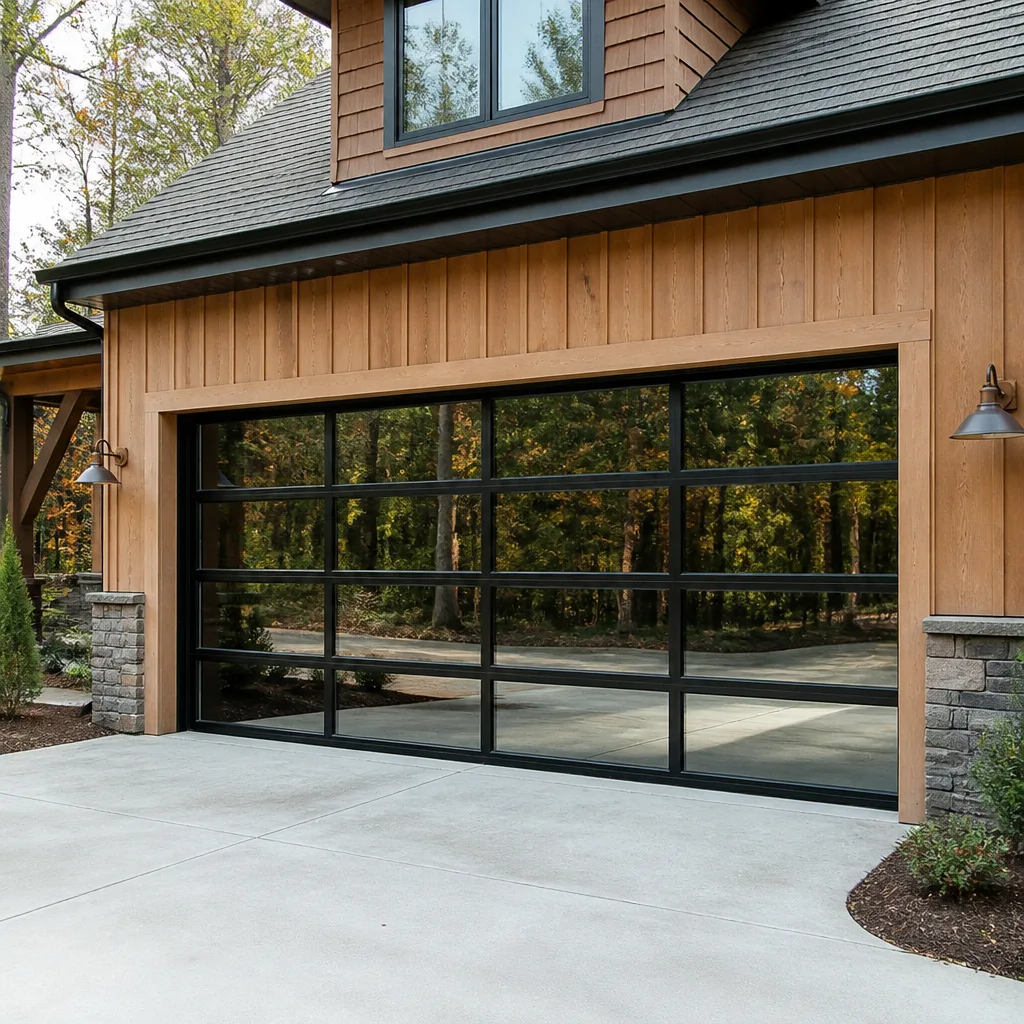 Full-view glass
 LiftMaster openers
 Chamberlain openers
Full 25-point door and opener safety check with every visit - springs, cables, rollers, tracks, and your LiftMaster or Chamberlain opener included
You get a price before we start. It does not change when the pro arrives.
Get your free estimateGarage Door Permits, Codes & Inspections in Pembroke Pines, FL: What You Need to Know
Here’s the part most homeowners get backwards: the permit is not paperwork you do after the door is hung. In Broward County, the permit and the product approval are what prove your new door meets wind-load code, and that proof travels with the house. Buyers’ inspectors in Pembroke Pines know to look for it, and a replacement that skipped the process can surface on a 4-point inspection years later. This guide walks through exactly when a Pembroke Pines garage door job needs a permit, how Florida Building Code Chapter 16 wind-load rules apply, what a product approval number is, and what the review timeline looks like so nothing catches you off guard.
Quick Answer
In Pembroke Pines, a full garage door replacement generally requires a permit from the city’s Building Division, while a repair to an existing door usually does not. The permit exists to confirm the new door carries a Florida Building Code product approval and meets the wind-load requirements for this part of Broward County. Repairing a spring, cable, roller or opener on a door that’s already approved is typically handled without a permit.
Styles & brands we work with
- Raised-panel steel
- Carriage house
- Modern flush
- Full-view glass
- LiftMaster openers
- Chamberlain openers
Table of Contents
- When Is a Garage Door Permit Required in Pembroke Pines?
- Florida Building Code Chapter 16 and Wind-Load Requirements
- What a Product Approval Number Is and Why It Matters
- How the Field Inspection Actually Works
- Unpermitted Work and the 4-Point Inspection
- Permit Timeline and Cost Through the Pembroke Pines Building Division
- What Your Contractor Handles vs. What You Handle
When Is a Garage Door Permit Required in Pembroke Pines?
A permit is generally required when the door itself changes – a new door installed in a new or existing opening, a full replacement of the door and track assembly, or a change in door size or type. That’s the dividing line most homeowners miss: the city cares about the assembly that holds wind load, not the mechanism that raises it.
Repairs to a door that’s already in place and previously approved usually move forward without a permit. Spring replacement, cable and drum work, roller and hinge swaps, panel replacement where the door model is unchanged, and opener repair all fall into the service category. We work on these every week in Pembroke Pines, and the vast majority are straightforward repairs with no filing involved.
Here’s the practical distinction:
- Like-for-like repair: Same door, same model, one component replaced. No permit.
- Full replacement: New door and track, even if the size is identical. Permit required.
- Panel swap on an existing approved door: Generally a repair, provided the panel matches the approved model.
- Opener replacement or repair: Not a structural change, so no permit at the city level for the opener itself. Electrical work to feed a new opener is a separate question, so confirm with the Building Division.
- Changing door type or size: Permit required, and the new door needs its own product approval for the opening.
The rules that apply here are the Broward County amendments to the Florida Building Code, and they’re enforced locally by the Pembroke Pines Building Division. When you’re unsure, call the Building Division directly with your address and door model. Their answer is the one that counts. Our team can also tell you upfront what category your job falls into – a small thing that saves a lot of guessing.
One more point of context: Pembroke Pines sits well inland in Broward County, which matters for wind-load but not in the way people assume. The required design pressure for a garage door opening depends on the structure and its exposure, not just the general region, and the engineer or contractor handling the permit works from the actual design documents. That’s part of why the product approval has to reference a specific door for a specific opening.
Florida Building Code Chapter 16 and Wind-Load Requirements
Florida Building Code Chapter 16 governs structural design loads, and garage doors are treated as large openings in the building envelope. The door must resist the design wind pressure for its location and exposure, and the manufacturer’s product approval states the pressure rating the door is certified to handle. The inspector’s job is to confirm the door installed matches what the permit says.
In our experience, the misunderstanding is usually about sequence. Homeowners assume the door is chosen first and the permit filed after. It works the other way: the door model is selected, its product approval and pressure rating are confirmed against the opening, and then the permit application is submitted with that documentation attached.
What inspectors typically look for in the field:
- The door matches the approved model. Same manufacturer, same model line, same listed pressure rating. A door from a different line isn’t the same thing even if it looks identical.
- Anchoring matches the documentation. The bracket and fastener schedule on the approved drawings has to match what’s installed, because the attachment transfers wind load into the framing.
- Track and reinforcement are as specified. Doors rated for higher pressures often carry specific reinforcement requirements.
- Labels are visible. The permanent label or marking on the door ties it back to its product approval. If it’s been painted over or removed, the inspection gets complicated.
Different municipalities within Broward County read the same code with slightly different local expectations and paperwork requirements, so a door that was approved in a neighboring city isn’t automatically approved in Pembroke Pines without the same documentation. The product approval is the common thread; the submission format is not.
What a Product Approval Number Is and Why It Matters
A Florida product approval is the state’s certification that a specific product – a garage door model, in this case – meets the code requirements for its stated use. The number identifies that approval, and it’s the single most important piece of information on a garage door permit application for new construction or replacement.
You’ll find the product approval number in the manufacturer’s published documentation, in the door’s installation instructions, and often on a label affixed to the door or its packaging. It’s not a serial number and it isn’t the model name by itself. It’s a distinct identifier that links the door to a specific evaluation.
Why the contractor has to reference it precisely:
- The city’s review confirms the approval covers the pressure rating your opening requires.
- The approval ties the door to its installation method, which is why anchoring and reinforcement show up in the review.
- If the number references a different door or a superseded approval, the review stops until it’s corrected.
- At final inspection, the number is what lets the inspector match the installed door to what was approved.
This is where brand familiarity earns its keep. We service LiftMaster, Chamberlain, Genie, Clopay, Amarr, Wayne Dalton, Craftsman and Raynor systems, and knowing each manufacturer’s documentation and where its approvals live is routine for our technicians. If your existing opener and door are one of those lines, we already know what to look for. When an insurance claim enters the picture, we can work with your insurer on the documentation side – the specifics of what they’ll want vary by carrier.
For a broader look at how replacement decisions come together, our garage door installation page walks through door selection, measurement and scheduling.
How the Field Inspection Actually Works
The inspection is a comparison exercise, not a judgment call. The inspector arrives with the approved plan and product approval on file, then checks the installed door against them. If everything lines up, it passes.
A typical sequence for a Pembroke Pines replacement runs like this:
- Application submitted with the door’s product approval number, pressure rating, and installation details.
- Plan review by the Building Division confirms the documentation covers the opening.
- Permit issued. Installation can be scheduled.
- Installation completed to the approved specification – same door, same anchoring, same reinforcement.
- Final inspection where the inspector verifies the door on site matches the approved model and labeling is intact.
- Permit closed and the record stays with the property.
The most common snag isn’t a failed install. It’s a mismatch between what was approved and what got installed, often because a door was substituted after review without updating the application. A door that’s functionally just as good but from a different model line is not the same door as far as the permit is concerned. We’ve seen the whole thing unwind from that one substitution, and it’s completely avoidable by confirming the model before the order is placed.
If you have a repair rather than a replacement coming up and no permit is involved, an inspector never enters the picture. For that kind of work, garage door repair handles the diagnosis and the fix directly.
Unpermitted Work and the 4-Point Inspection
A 4-point inspection covers the roof, electrical, plumbing and HVAC systems, and it’s commonly requested by insurers for older homes in South Florida. Garage doors aren’t one of the four named systems, but that doesn’t mean they escape notice – inspectors and buyers’ agents routinely flag doors that appear newer than the rest of the home with no permit record to support the installation.
What unpermitted work means in practice:
- The buyer’s inspector asks for documentation. A recent door with no permit record stands out in the property history.
- The seller carries the correction cost. Closing can stall until the installation is brought into compliance, and the seller is the one who picks up that bill.
- Insurance questions get harder. After storm damage, a carrier reviewing a claim may want to confirm the opening met code. Missing documentation makes that conversation longer and less certain.
- It doesn’t fix itself. Unpermitted work stays unpermitted until someone files for it, and doing that retroactively is more involved than getting it right the first time.
The reason this matters more in Pembroke Pines than in many markets is straightforward: homes here turn over, and buyers in this market are informed about wind-load code and the difference between a door that’s documented and one that isn’t. A garage door permit record isn’t a bureaucratic nicety. It’s part of what makes the house sellable. When someone asks us whether a door needs a permit, the honest answer is often yes, and the honest reason is resale.
Permit Timeline and Cost Through the Pembroke Pines Building Division
Plan review timelines move with the city’s workload, so treat any estimate as a planning range rather than a promise. In our experience, straightforward residential garage door replacement applications reviewed with complete documentation move through in a reasonable window; corrections add time. The fastest way to avoid a stall is a complete submission the first time.
On cost, the permit fee itself is set by the city and based on the job valuation, so the best number comes from the Building Division when the application is filed. We won’t invent a figure for you. What we can tell you is what to expect from the process:
- Documentation first. Product approval number, model, pressure rating, and installation method assembled before submission.
- One review cycle if the paperwork is clean. Corrections are what turn a short review into a long one.
- Scheduling after issuance. Replacement work is measured and ordered, so the calendar starts once the permit is in hand.
- Final inspection within the permit’s window. The city sets the expiration, so don’t let a job sit after installation.
One thing we want to be clear about: replacement and installation work isn’t same-day work. It’s measured, ordered, permitted and scheduled, and that’s the right sequence. What you should expect from the contractor is a free measure and a written price before anything is ordered. Repair calls are a different animal – those we move on quickly, because a broken spring or a door off track means the house isn’t secure.
Speak with the Pembroke Pines Building Division for the current fee schedule and review times. For the work itself, call (844) 443-4021 and we’ll walk through what your job needs.
What Your Contractor Handles vs. What You Handle
The cleanest way to think about the permit is that it belongs to the property, but the filing belongs to the contractor. Homeowners don’t usually pull garage door permits themselves, and most wouldn’t want to – the application requires knowledge of product approvals, pressure ratings and installation methods that only makes sense if you work with doors daily.
What we handle:
- Identifying the door model and its Florida product approval number.
- Confirming the pressure rating against your opening before the order is placed.
- Preparing and submitting the application to the Pembroke Pines Building Division.
- Installing to the approved specification, exactly as filed.
- Coordinating the final inspection.
What you handle:
- Approving the written estimate before work starts.
- The permit fee itself, which is separate from the installation price.
- Providing access to the garage and any HOA documentation your community requires.
One separate question worth raising: homeowners associations in parts of Pembroke Pines have their own architectural review requirements for exterior changes, including garage doors. That’s not a city permit, but it’s a parallel approval you don’t want to discover after the door is on order. Check with your HOA before finalizing a door choice.
If the opener is failing at the same time as the door, our garage door opener repair page covers that side of the system. And for the full range of what we do across the city, our garage door repair Pembroke Pines pros page is the place to start.
Whether it’s a Clopay or Amarr replacement headed for permit review or a Genie opener that’s quit, knowing the manufacturer is where a proper job starts. We work on your brand, and that means the right parts, the right documentation, and no guesswork about compatibility.
Common Mistakes to Avoid
- Assuming a replacement doesn’t need a permit because the size is unchanged. The city cares about the assembly and its approval, not whether the opening stayed the same. A full replacement of the door and track is a permitting event.
- Ordering the door before confirming the product approval. If the model you pick doesn’t carry an approval for the required pressure rating, the review stops and the order may need to change. Confirm first, order second.
- Substituting a door after plan review. A different model line is a different door as far as the permit is concerned. If the door changes, the application changes.
- Pulling a permit on a repair that doesn’t need one. Filing for spring or opener repair on an existing approved door adds time and cost to a job that typically doesn’t require it. Ask the Building Division if you’re unsure.
- Skipping the HOA approval. Several Pembroke Pines communities require architectural review for exterior door changes. That approval runs on its own timeline and doesn’t overlap with the city’s.
- Leaving the permit open after installation. An open permit shows up on the property record and creates exactly the kind of question you were trying to avoid. Schedule the final inspection promptly.
- Treating permits as the contractor’s problem alone. The filing is the contractor’s job, but the record attaches to your house. Ask for the permit number and keep it.
See the difference
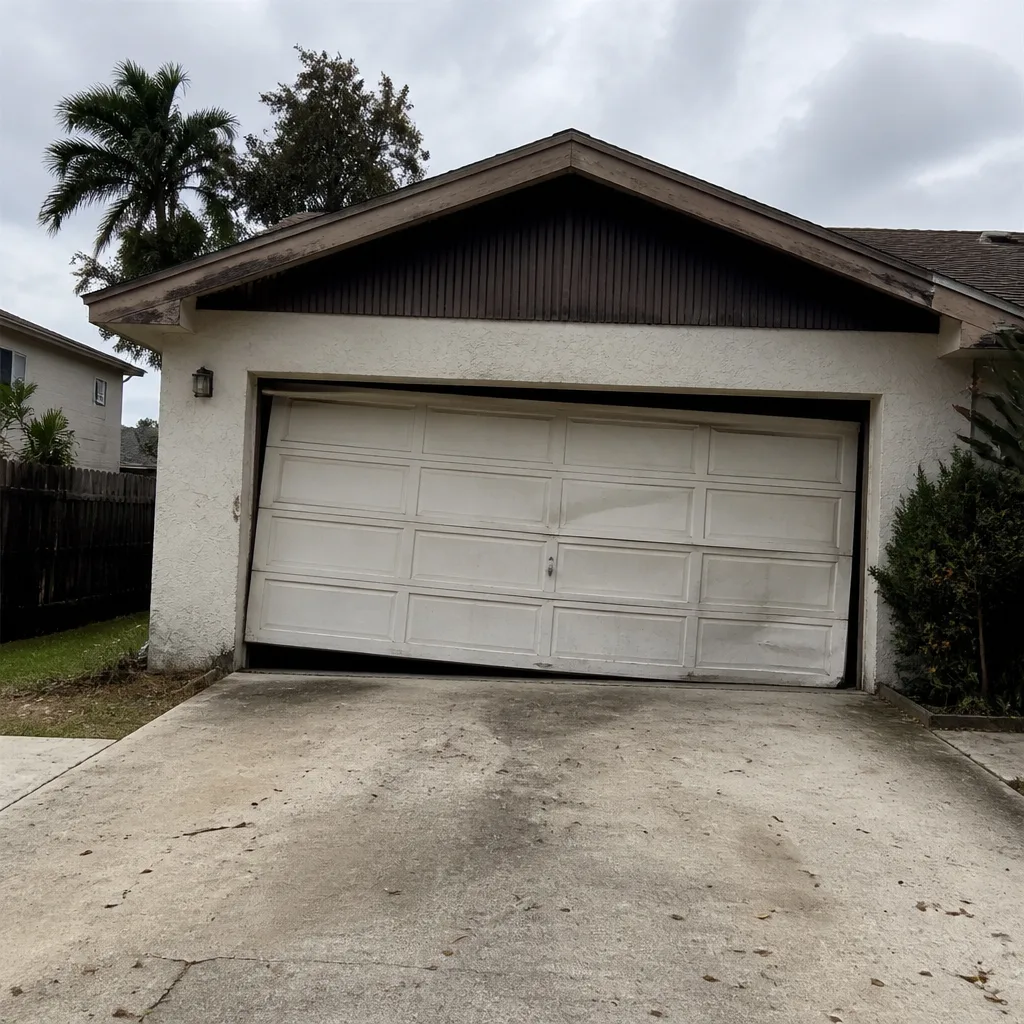 Before
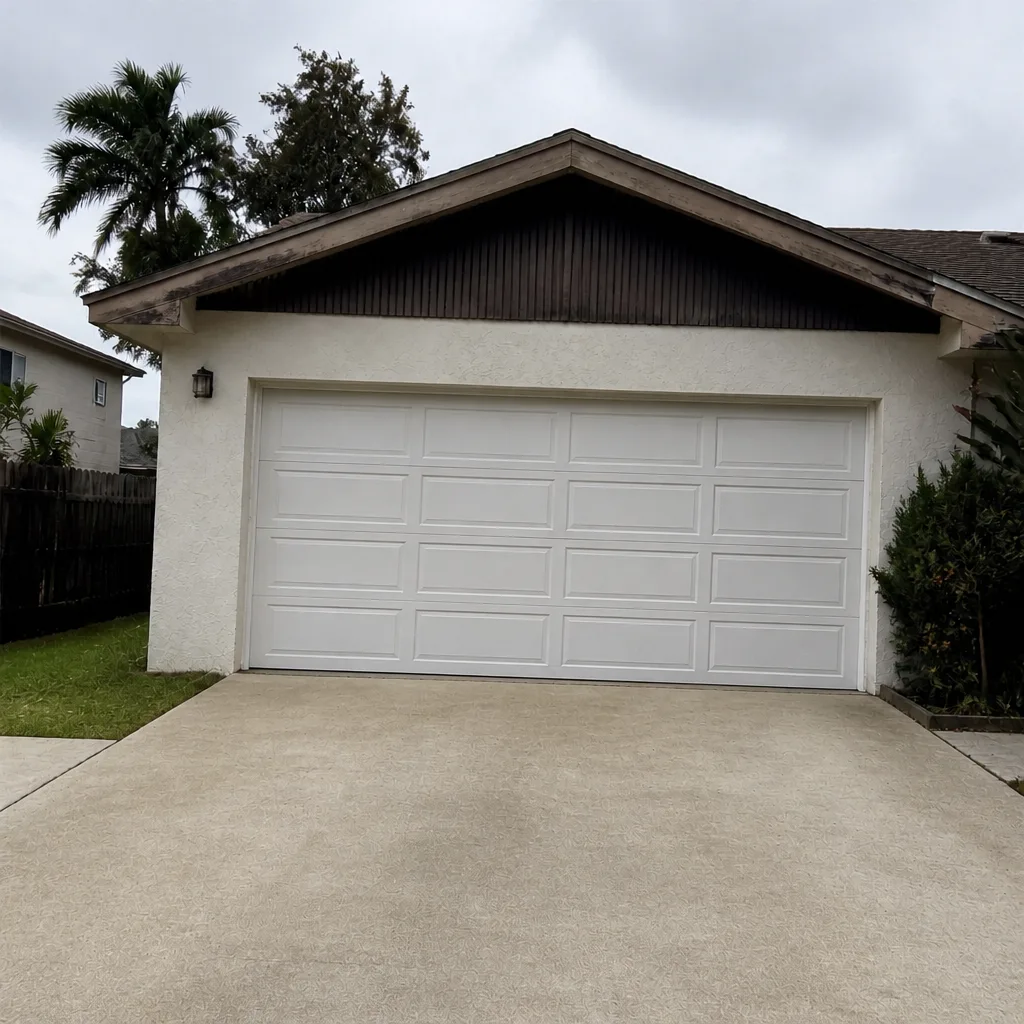 After
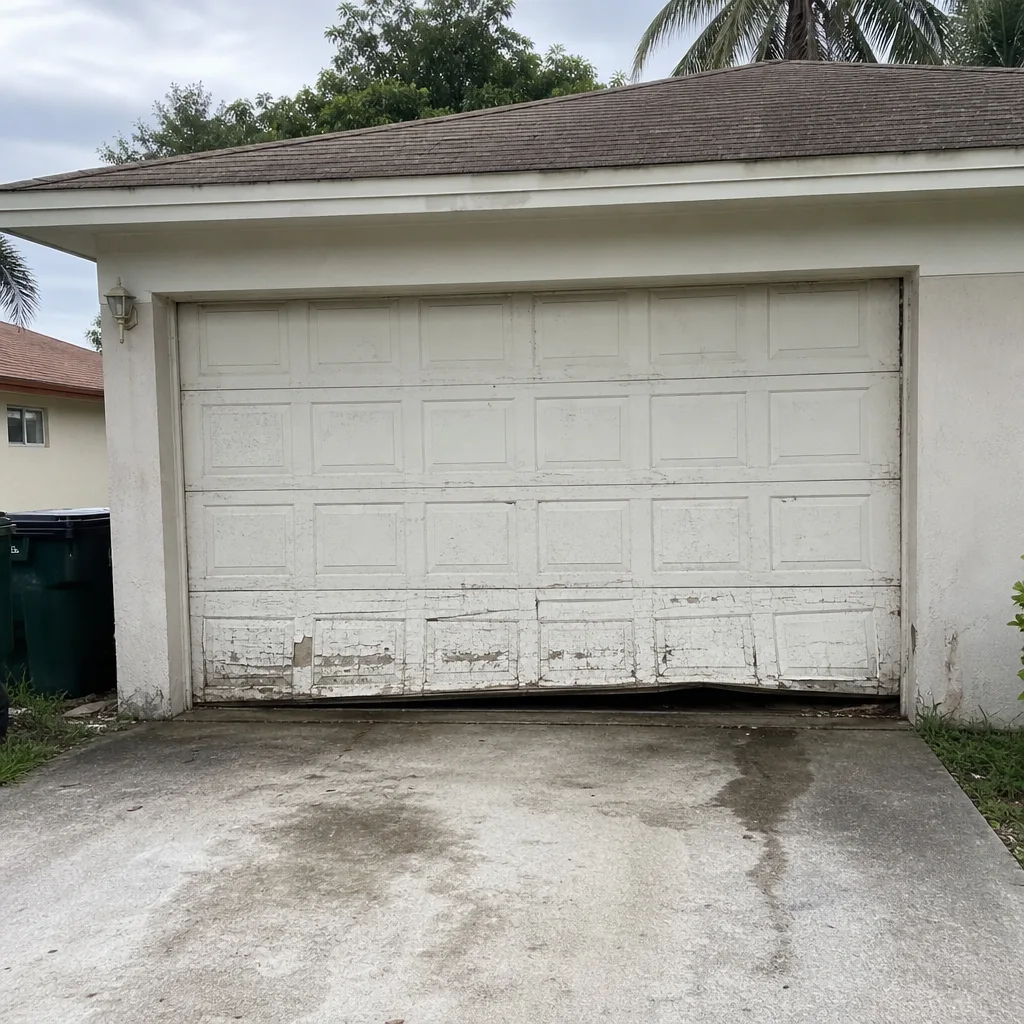 Before
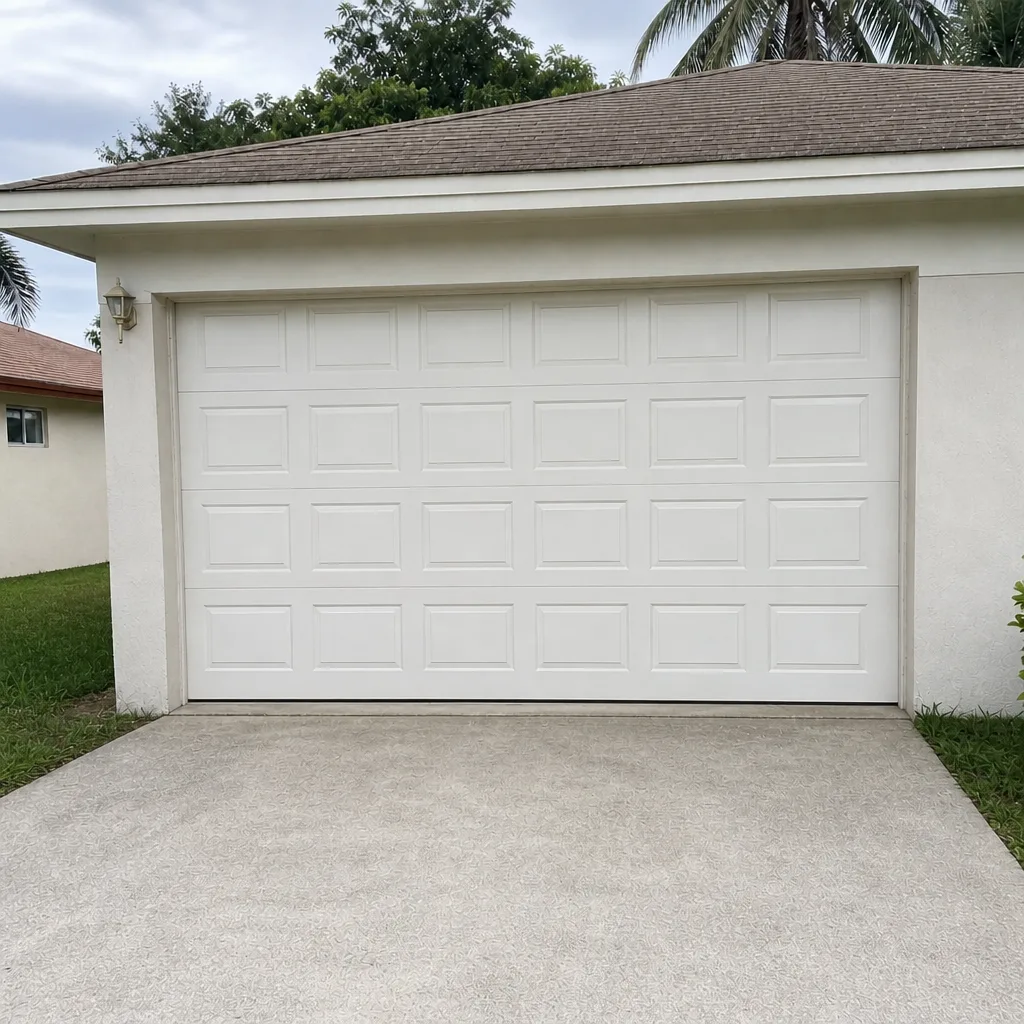 After
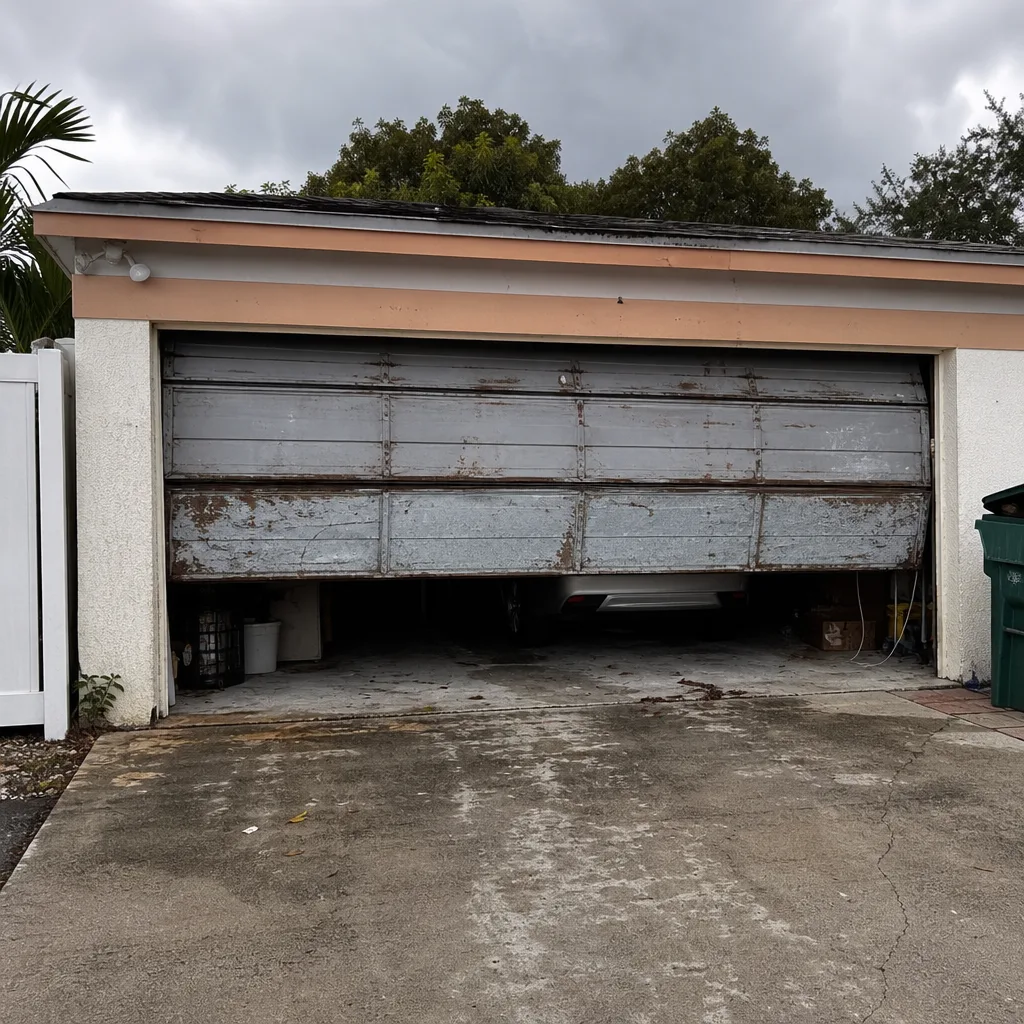 Before
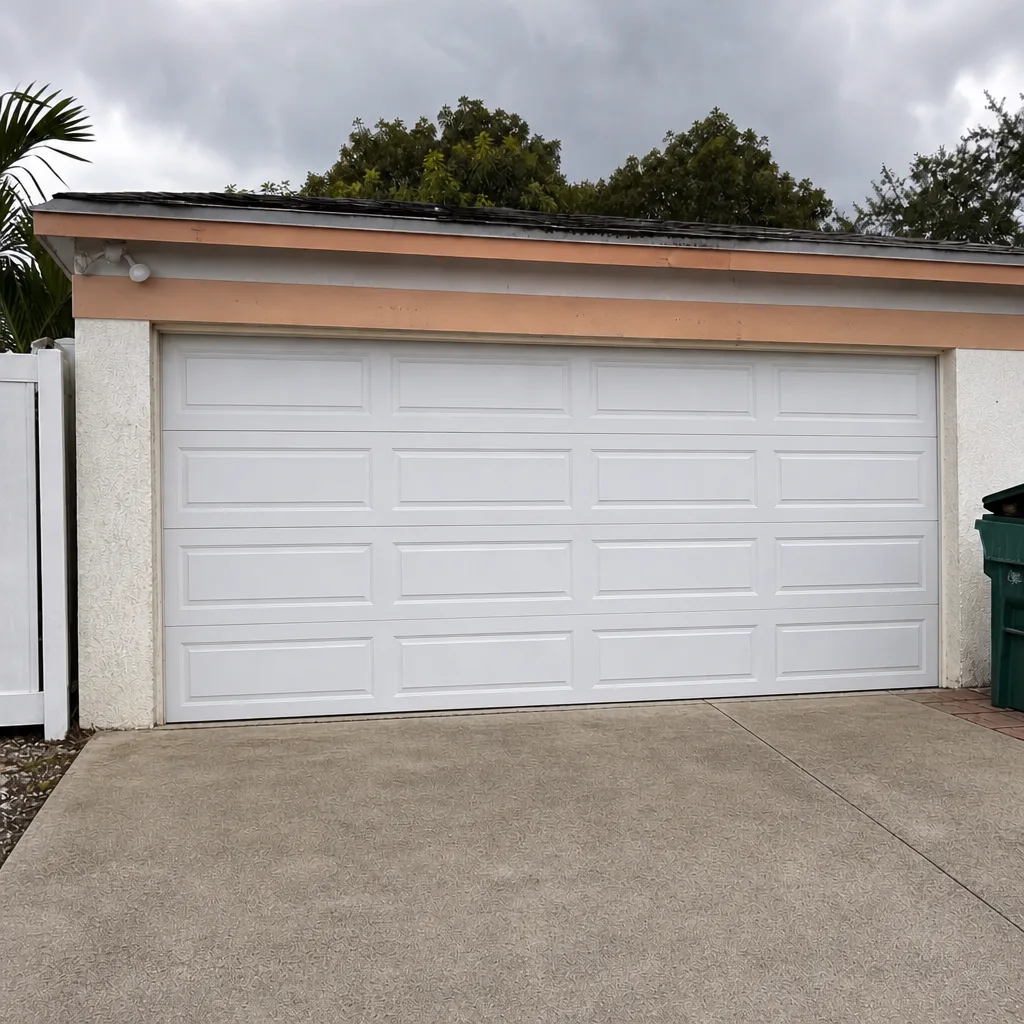 After
When to Call a Professional
Permit questions we can answer. Dangerous work is a different category entirely.
Call us when a spring breaks, when the door comes off track, when a panel is bent or the door won’t close flush, or when the opener runs but the door doesn’t move. Springs and cables are under high tension, and the injury risk is real and serious. Those are jobs for a trained technician with the right tools, not a weekend project – we handle spring repair as a core specialty for exactly that reason. Emergency calls for a door stuck open or hanging off its track get priority because an open garage is an open house.
Call us before you order a replacement door, too. A free measure at the start saves a permit correction later.
Garage Door Repair Pembroke Pines Pros offers free estimates in Pembroke Pines – call (844) 443-4021. Our technicians have up to 13 years of experience, and every price is quoted and agreed before any work starts.
Frequently Asked Questions
In most cases, yes. A full garage door replacement is generally a permitted job in Pembroke Pines because the door is a rated opening in the building envelope, and the permit is how the city confirms it meets wind-load code. Repairs to an existing approved door typically don’t require one. Call (844) 443-4021 if you want us to look at your specific job before you decide.
No. Spring, cable, roller and opener work on an existing door is a repair, not a structural change, so it doesn’t go through the permitting process. It’s also the most dangerous repair on the door, which is why it’s a job for a trained professional rather than a general handyman. Estimates are free – call (844) 443-4021.
Review timelines depend on the Building Division’s current workload and on whether your application is complete. A clean submission with the correct product approval number moves through faster than one that needs corrections, which is why we confirm the door model and its documentation before filing. Ask the Pembroke Pines Building Division for current review times, then call us at (844) 443-4021 to get the paperwork started.
It stays unpermitted until someone files for it, and that surfaces at resale. Buyers’ inspectors look for permit records on recent exterior work, and the seller usually carries the cost of bringing it into compliance. It can also complicate an insurance claim after storm damage if the carrier wants to confirm the opening met code. Call (844) 443-4021 and we’ll walk you through what a correction looks like.
It’s a state-issued identifier confirming a specific garage door model meets Florida Building Code requirements for its stated use and pressure rating. You’ll find it in the manufacturer’s documentation, in the installation instructions, and often on a label on the door. Your contractor needs that number on the permit application – it’s how the city knows the door is approved for your opening. Call (844) 443-4021 with your door model and we’ll help you identify it.
The local pro we connect you with is licensed and insured as Florida requires, and our technicians have up to 13 years of experience with brands including LiftMaster, Chamberlain, Clopay and Raynor. The price is quoted and agreed before any work starts, and the written estimate sets the final price. Call (844) 443-4021 for a free estimate.
The Bottom Line
Garage door replacement in Pembroke Pines is a permitted job in more cases than most homeowners expect, and the reason is wind-load code. The product approval number proves your door is rated for the opening; the permit record proves it was installed as approved; and the closed permit is what keeps the property clean at resale and after a storm claim. Repairs to an existing door usually skip all of this. So the practical takeaway is simple: confirm the category before work starts, confirm the product approval before the door is ordered, and get the final inspection scheduled so the record closes. When in doubt, call the Building Division – and call us for the work.
Written by the team at Garage Door Repair Pembroke Pines Pros.