Last updated November 22, 2026
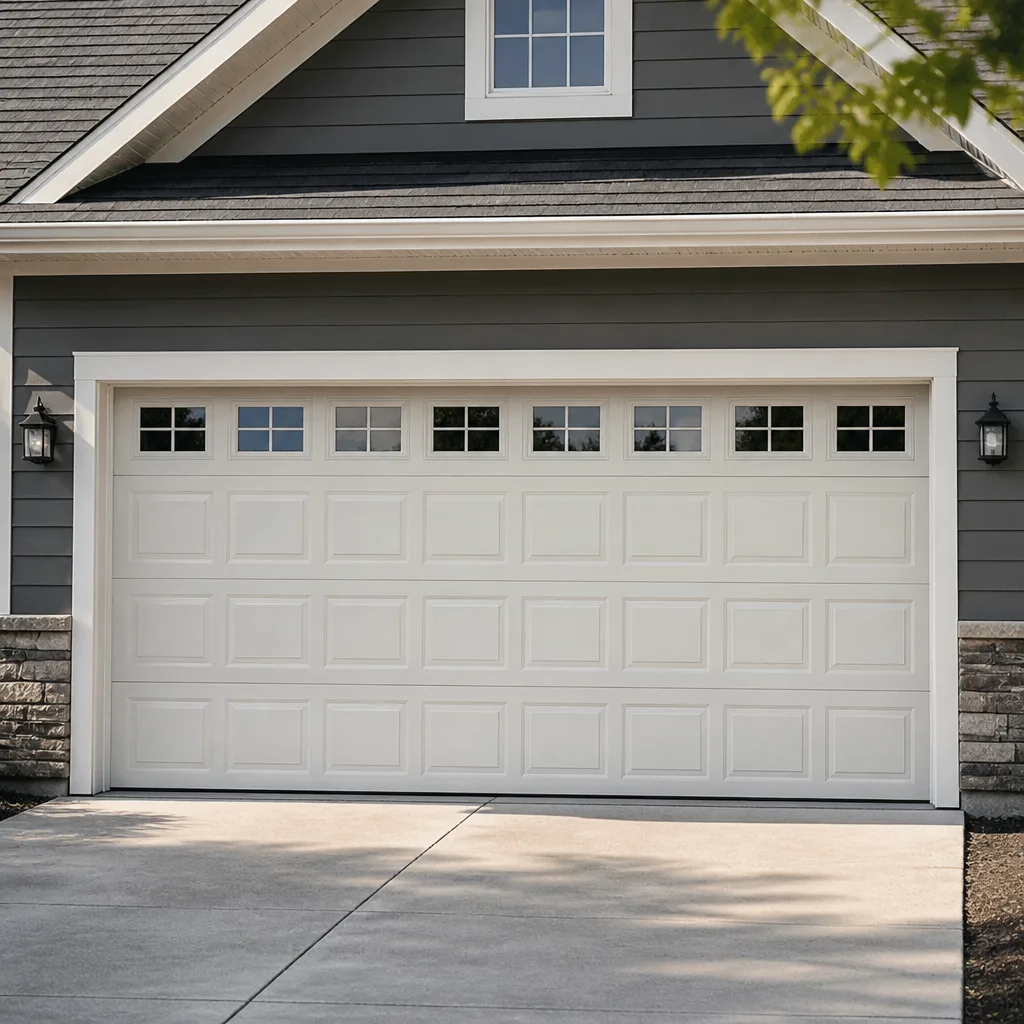 Raised-panel steel
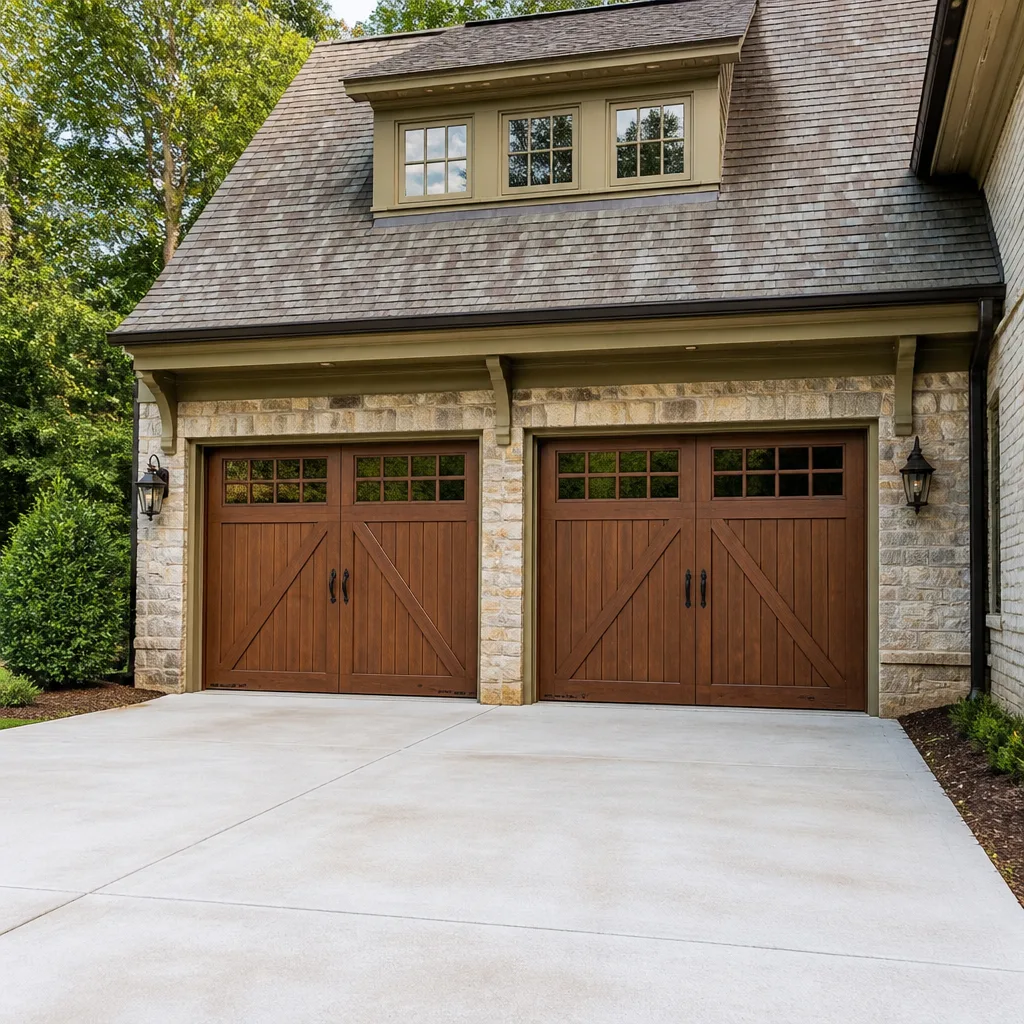 Carriage house
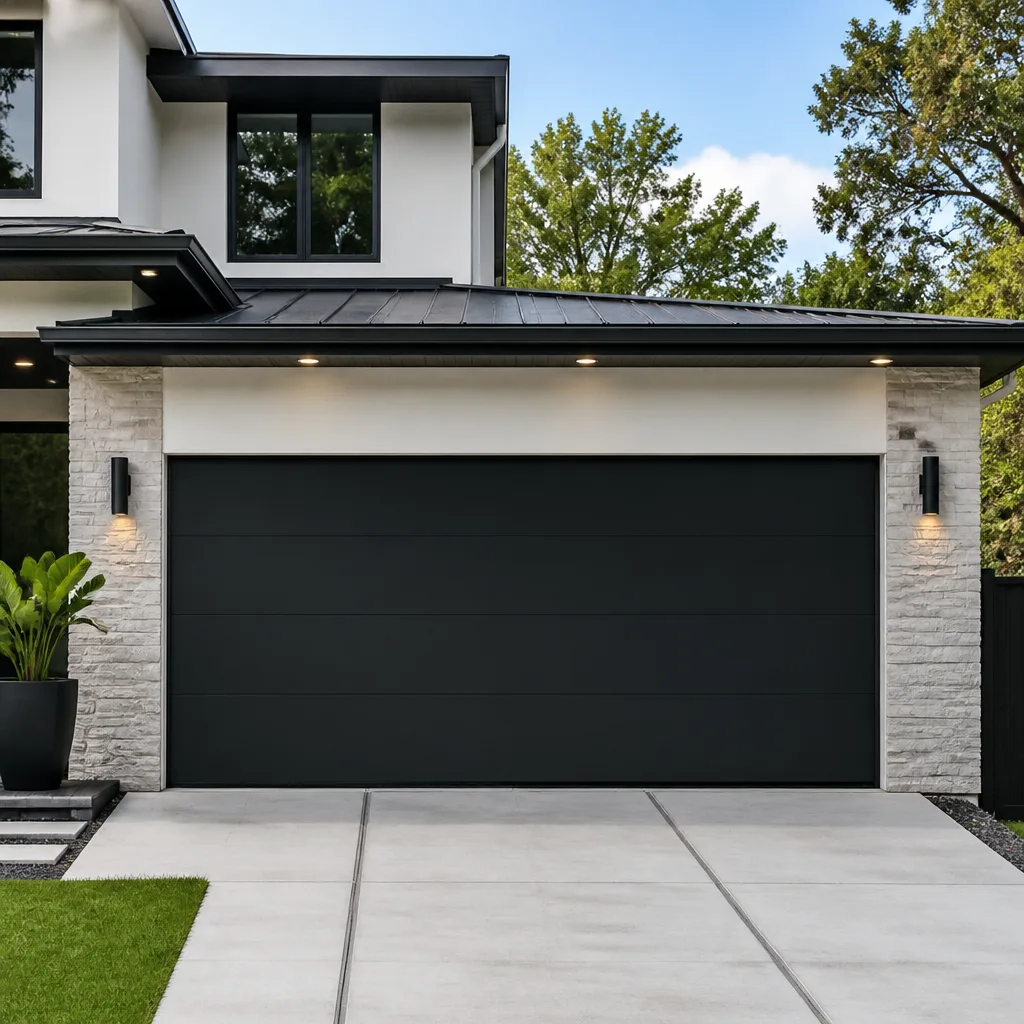 Modern flush
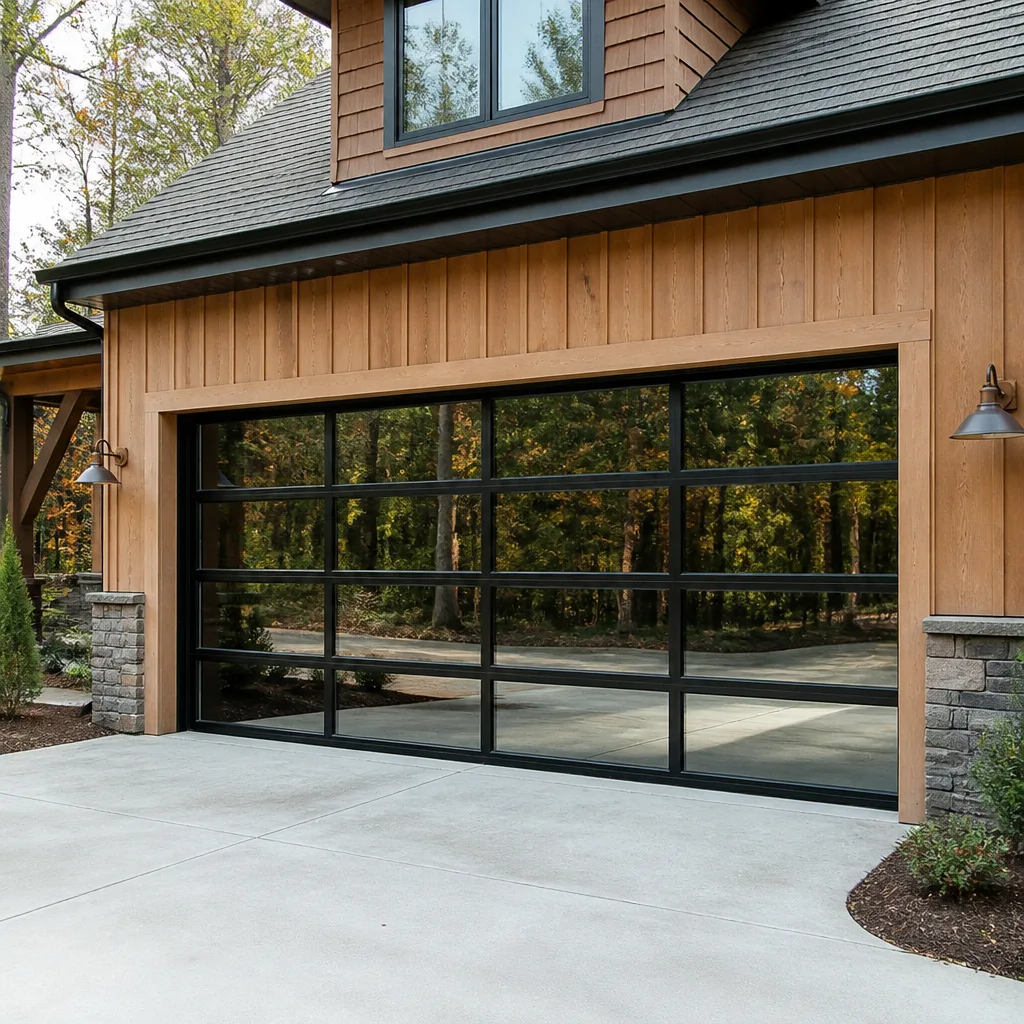 Full-view glass
 LiftMaster openers
 Chamberlain openers
Full 25-point door and opener safety check with every visit - springs, cables, rollers, tracks, and your LiftMaster or Chamberlain opener included
You get a price before we start. It does not change when the pro arrives.
Get your free estimateGarage Door Warning Signs: A Pembroke Pines Homeowner’s Reference Guide
Most garage door warning signs get written about in the laziest possible terms. “Unusual noises.” “Strange behavior.” That tells you nothing, and it’s why so many Pembroke Pines homeowners end up paying for parts they didn’t need or waiting too long on a failure they could have caught early. When a technician asks “what’s it doing?” and you can answer precisely – grinding from the left side, popping at the top of travel, a door that runs but doesn’t lift – the diagnostic call is shorter, the quote is more accurate, and you’re much harder to upsell. This guide gives you the vocabulary: which symptom maps to which mechanical cause, what’s cosmetic versus structural, and which failures mean stop using the door today.
Quick Answer
Garage door warning signs fall into four groups: sound symptoms (grinding, popping, squealing, banging), visual symptoms (bent tracks, uneven gaps, rust streaks, frayed cables), opener behavior (slow response, reversing, motor running without movement), and safety-critical failures (snapped spring, door off track, cable damage) that mean stop operating the door immediately and call a professional. In Pembroke Pines, the combination of high humidity and heavy seasonal rain makes weather seal failure and track corrosion the two most commonly missed early signs.
Styles & brands we work with
- Raised-panel steel
- Carriage house
- Modern flush
- Full-view glass
- LiftMaster openers
- Chamberlain openers
Table of Contents
- What Each Garage Door Sound Tells You About the Cause
- Visual Warning Signs: Cosmetic Versus Structural
- Warning Signs Specific to South Florida Conditions
- Opener Behavior Flags and What They Mean
- The Safety Risk Hierarchy: Stop Now Versus Schedule a Visit
- A Seasonal Check Routine for Pembroke Pines Homes
- How to Describe the Problem Accurately When You Call
- When to Call a Professional
What Each Garage Door Sound Tells You About the Cause
Sound is the fastest diagnostic tool a homeowner has, and it’s the one most people describe vaguely. A garage door is a mechanical system with a limited number of moving parts: springs, cables, rollers, hinges, bearings, and the opener’s gear and rail assembly. Each of those parts fails in a characteristic way, and each failure makes a distinct sound. Here’s how to map what you’re hearing to what’s actually wrong.
- Grinding. A steady, metallic grind usually points to worn or seized rollers, dry bearings, or a torsion bar rubbing where it shouldn’t. It often starts on one side and spreads. If the grind appears only as the door reaches the top of its travel, suspect a roller coming out of its track rather than bearing wear.
- Popping or snapping. Sharp pops at the start of a cycle are commonly a cable jumping its drum or a torsion spring winding unevenly. A single loud pop followed by a door that won’t lift at all is usually a broken spring, and that means stop.
- Squealing. High-pitched squeal is almost always friction: dry hinges, dry rollers, or a dry torsion bar. It’s the least urgent sound on this list and the easiest to resolve, but it shouldn’t be ignored because friction accelerates wear on everything it touches.
- Banging or slamming. A door that bangs as it closes is usually a travel-limit setting that lets the door hit the floor hard, or a failing opener gear that can no longer hold the door’s weight on the way down.
- Rattling that changes with weather. Loose hardware rattling is common and usually harmless. Rattling that gets louder during Pembroke Pines’ humid summer months points to fasteners backing out as wood framing and metal brackets expand and contract at different rates.
Write down which sound you hear, when in the cycle it happens, and which side of the door it comes from. That’s the difference between a diagnosis and a guess. When you book garage door repair, those three details let the technician arrive with the right parts instead of making a second trip.
Visual Warning Signs: Cosmetic Versus Structural
Not every mark on a garage door is a problem, and treating cosmetic wear like a structural failure is how homeowners end up replacing panels they didn’t need to replace. The trick is separating what’s on the surface from what’s affecting how the door moves.
Usually cosmetic
- Faded paint or chalky finish on the outer skin, common on west-facing doors in Pembroke Pines after years of afternoon sun.
- Small dings and scuffs on the bottom panel from bicycles and lawn equipment.
- Surface rust spots on hinge plates that don’t affect movement.
- Dust or pollen streaks that wipe away.
Usually structural or mechanical
- A visible gap along one side of the closed door. This usually means a track is out of plumb or a panel is bent. It’s also an entry point for water and pests.
- Bent or bowed vertical track. Track that’s no longer straight forces rollers to bind, which loads the opener and the springs. A slight bow gets worse, never better.
- Sagging top section. A top panel that dips in the middle often follows a cable or spring problem and puts uneven load on the whole system.
- Cables that look frayed, kinked, or are hanging slack. Cables are under extreme tension and are a stop-using-the-door sign.
- Cracked or separated hinges. Worn hinges let panels shift, which throws the door out of alignment.
- Rust streaking that runs downward from the springs or cable drums. This isn’t cosmetic. Rust on load-bearing hardware means the metal is thinning where it matters most.
One quick test that separates the two categories: open the door halfway and look at it from the side. A door that’s straight when closed but visibly out of line at mid-travel has a mechanical problem, not a cosmetic one. That’s the point where a diagnostic visit is worth the call, and it’s the kind of check our technicians make on every garage door repair Pembroke Pines Pros appointment before anything gets quoted.
Warning Signs Specific to South Florida Conditions
Garage doors in Pembroke Pines live in a harder environment than the generic advice on most garage door sites accounts for. High humidity, heavy summer rain, and year-round warmth create a specific set of failure patterns that show up here more than in drier or colder climates. Knowing them lets you catch problems months earlier.
Rust streaking patterns
In humid air, condensation forms on cold metal each morning and evaporates by midday. That cycle repeats daily, and it attacks the points where water sits: spring coils, cable drums, hinge pins, and the bottom bracket. Rust streaks running down from the spring area or fanning out from a hinge tell you moisture is collecting there. Surface haze on a hinge plate is normal. Pitting or flaking on a spring is not, and a rusted spring is a weakened spring.
Weather seal failure modes
The bottom rubber seal is the first line of defense against rain, insects, and humidity. In Pembroke Pines it takes a beating from heat and UV. Watch for three stages: the seal goes stiff and loses its spring, then it flattens and stops touching the floor across its full width, then it cracks or tears. A door that lets in a strip of daylight at the bottom is already past stage two. Replacing a bottom seal is a small job. Ignoring it means water on the garage floor every storm, which is how the bottom panel and the framing behind it start to rot.
Humidity-related track warping and hardware drift
Steel track, wood framing, and the door’s own panels all respond to humidity differently. Over a Pembroke Pines summer, brackets can shift a fraction of an inch as the wood swells and dries. That’s often enough to make a door that ran quietly in spring start to rub or bind by August. You’ll hear it before you see it, which is why the sound section and this one belong together. If your door gets louder every rainy season, the tracks are the first thing to check.
Storm-driven impact and water intrusion
Heavy rain driven sideways finds every gap. If water gets past the seals during a storm and the door starts misbehaving afterward, the cause is usually a bent track, a shifted panel, or a soaked sensor circuit rather than anything inside the opener. Hail is uncommon here, so when a door takes impact damage it’s almost always from wind-blown debris. Get it looked at before the next front moves through.
Opener Behavior Flags and What They Mean
The opener is the part homeowners describe most vaguely, because it’s the part they interact with. “The opener is acting up” covers at least four distinct failures. Match the behavior to the cause and you’ll know whether you’re looking at a small fix or a replacement.
Slow response when you press the button
A short delay before the door moves is usually a signal or logic board issue, not a motor problem – especially on older LiftMaster and Chamberlain units where the logic board ages. If the delay grows over weeks, the board is failing. If the delay only happens from one remote, it’s the remote or its battery.
Door reverses unexpectedly
Reversing mid-travel is almost always the safety sensors. Check for an obstruction in the beam path, misalignment between the two sensors, or a dirty lens. In Pembroke Pines, spider webs, pollen film, and condensation on the sensor lens are common causes and often the whole story. If the sensors are clean, aligned, and the door still reverses, the issue is in the wiring or the logic board, and it’s time for a technician.
Motor runs but the door doesn’t move
This is the classic stripped gear symptom, especially on chain-drive units that have years of cycles behind them. The motor spins, the rail doesn’t push. On some models it’s a broken trolley or a disconnected emergency release that never got re-engaged. Either way, the opener is running without load, which is safe in itself but means the door isn’t securing your home. That’s a same-day priority.
Door moves a few inches and stops
This usually points to a travel-limit setting that’s drifted out of adjustment or a door that’s binding badly enough to trip the opener’s force sensor. Don’t keep pressing the button hoping it’ll clear. Repeatedly forcing a binding door damages the opener’s gear train. When the behavior points to the opener rather than the door, garage door opener repair is the right call, and brand matters here: our technicians are trained on LiftMaster, Chamberlain, Genie, Clopay, Amarr, Wayne Dalton, Craftsman, and Raynor systems, so the diagnosis accounts for how your specific unit was built.
The Safety Risk Hierarchy: Stop Now Versus Schedule a Visit
This is the most important section in the guide. Some warning signs mean the door can wait for a scheduled appointment. Others mean the door should not move again until a professional has looked at it. Getting this wrong is how people get hurt.
A word on why: torsion springs, extension springs, and the cables that run with them store an enormous amount of energy. A spring under tension is a loaded component, and the tools and technique required to release and replace one safely are not things a homeowner should improvise. Neither is adjusting a cable under load. Our technicians have up to 13 years of experience, and spring work is one of the reasons that experience matters.
Stop using the door immediately
- You heard a loud bang from the spring area and the door won’t lift. That’s a snapped spring. Don’t try to help it up.
- A cable is hanging loose, kinked, or visibly frayed. Cables that fail under tension can cause serious injury.
- The door is off its track or hanging at an angle. Operating it will bend panels and put load on hardware that’s already compromised.
- The door came down on its own or won’t stay up. A door that falls without warning is a crush hazard.
- You see a visible gap between a panel and the track, or a top section sagging. This can escalate to a full drop.
- The opener’s force sensor keeps reversing the door on a clear path. Something is binding hard enough to trip it, and forcing it will make it worse.
Disconnect the opener (the emergency release cord) if you can do so safely with the door in the fully closed position, and call for emergency service rather than cycling the door to test it.
Schedule a visit, but don’t ignore it
- Grinding, squealing, or rattling that’s consistent and getting louder.
- A door that reverses only occasionally with clean sensors.
- Weather seal wear that lets daylight through at the bottom.
- Rust streaks on springs or hinge pins that haven’t caused a performance change yet.
- An opener that’s slow to respond or makes a new sound on the rail.
- Loose hinges and brackets that shift with the seasons.
If you’re unsure which list your symptom belongs on, describe it to us and we’ll tell you honestly whether it can wait. Emergency garage door service exists for exactly the situations in the first list, and a phone call is the fastest way to know which side you’re on.
A Seasonal Check Routine for Pembroke Pines Homes
Garage doors fail slowly, and most of the warning signs on this page are visible weeks before anything breaks, if you know where to look. A five-minute check four times a year catches most of them. Here’s the routine we recommend for Pembroke Pines homeowners. Note what you find each time; a change from one check to the next is more meaningful than any single observation.
- Listen to a full open-and-close cycle. Stand still and don’t do anything else. Note any new sound and which side it comes from.
- Look at the springs. Check for rust streaks, gaps in the coil, or a spring that looks stretched compared to the one next to it.
- Look at the cables. They should be straight and taut, with no fraying or kinks. If they’re slack, stop here and call.
- Check the bottom seal. With the door closed, look for daylight underneath. Run a hand along the seal to feel whether it’s still pliable or has gone stiff.
- Inspect the track on both sides. Sight down each rail from the bottom. It should look straight. Any bow, dent, or debris is worth noting.
- Test the safety reverse. With the door closing, pass a hand through the sensor beam. The door should reverse. If it doesn’t, the door isn’t safe to operate automatically.
- Wipe the sensor lenses. A dry cloth on both lenses once a season prevents most false reverses in humid weather.
- Look at the hinges and brackets. Check for cracks, loose screws, or rust that’s eating into the metal.
Do this before and after the rainy season. The Pembroke Pines summer is when humidity-driven problems show up, and the dry months are when they’re cheapest to fix.
How to Describe the Problem Accurately When You Call
The gap between a vague report and a precise one is often the difference between a quick diagnosis and a wasted trip. When you call for service, give the technician these five details and you’ll get a more accurate quote before anyone arrives.
- What you hear. Use the specific words from this guide: grinding, popping, squealing, banging, or a sound that only happens at one point in the cycle.
- When it happens. On opening, on closing, at the start, at the top of travel, at the bottom, or continuously.
- Where it comes from. Left side, right side, the center of the header, the opener rail, or the floor contact point.
- What the door does. Lifts fully, lifts partway, reverses, doesn’t move at all, or moves unevenly on one side.
- Your brand and model. The make and model of the door and the opener, if you can read it off the labels. This matters for parts and compatibility, and it’s why we work on your brand rather than guessing.
If you can also tell us whether the problem started after a storm, a power outage, or a change in the weather, include that. It often narrows the cause in a sentence. When a repair reveals that a door is past the point of cost-effective repair, we handle garage door installation as well, so a single call covers both outcomes. You won’t need to find a second company partway through.
See the difference
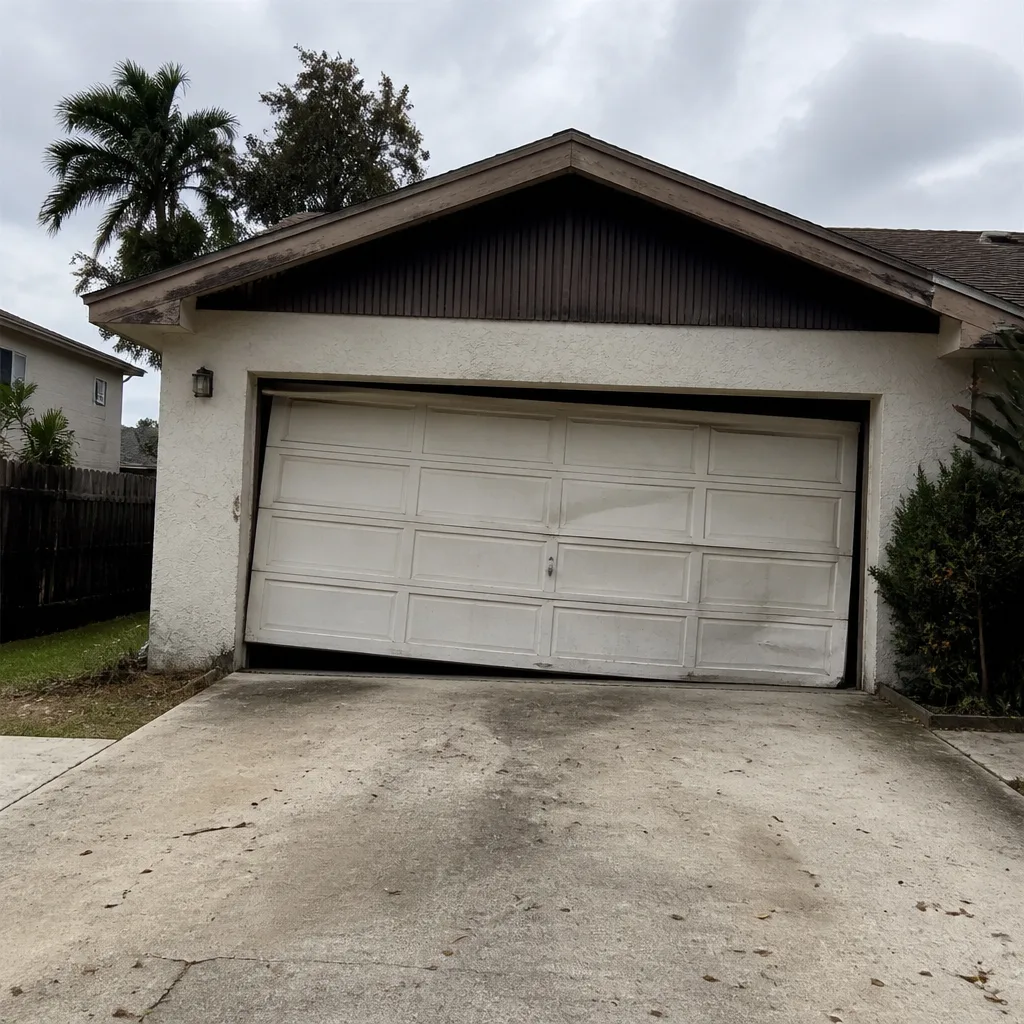 Before
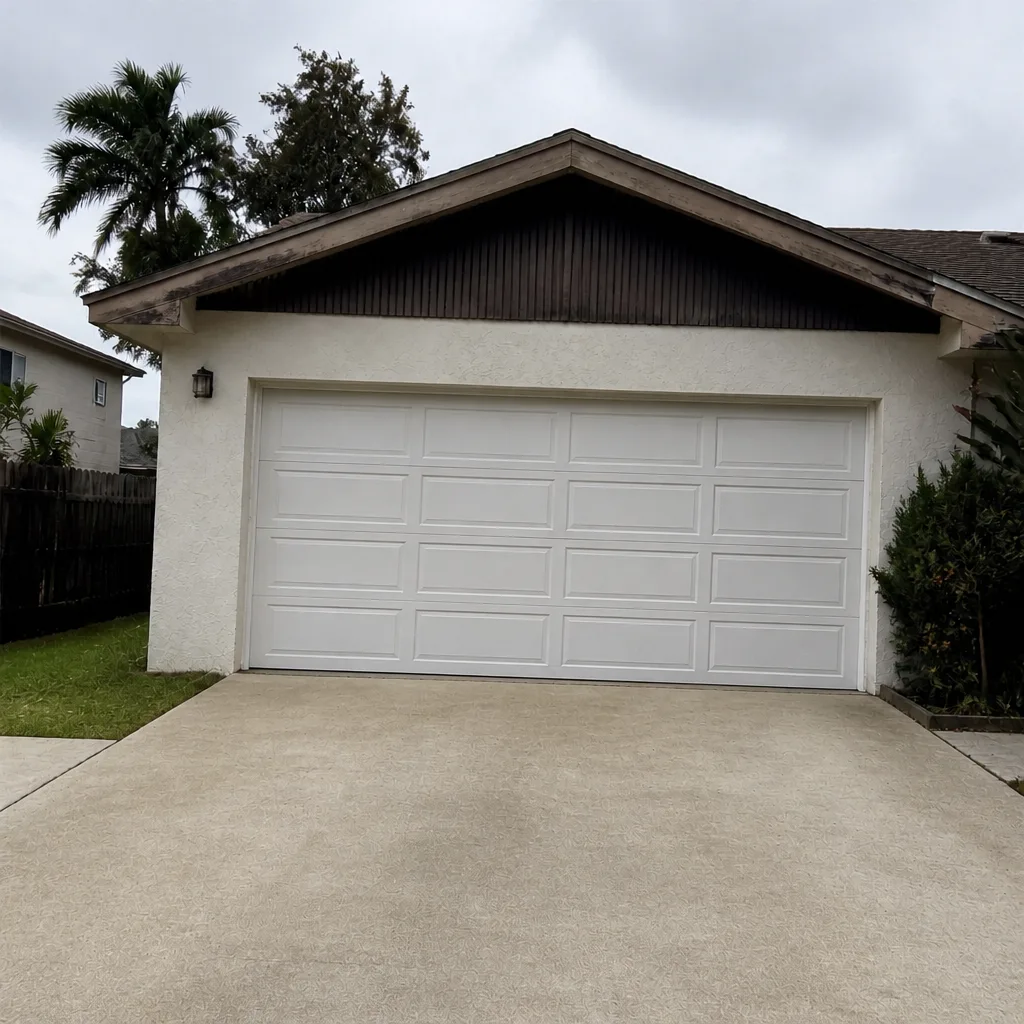 After
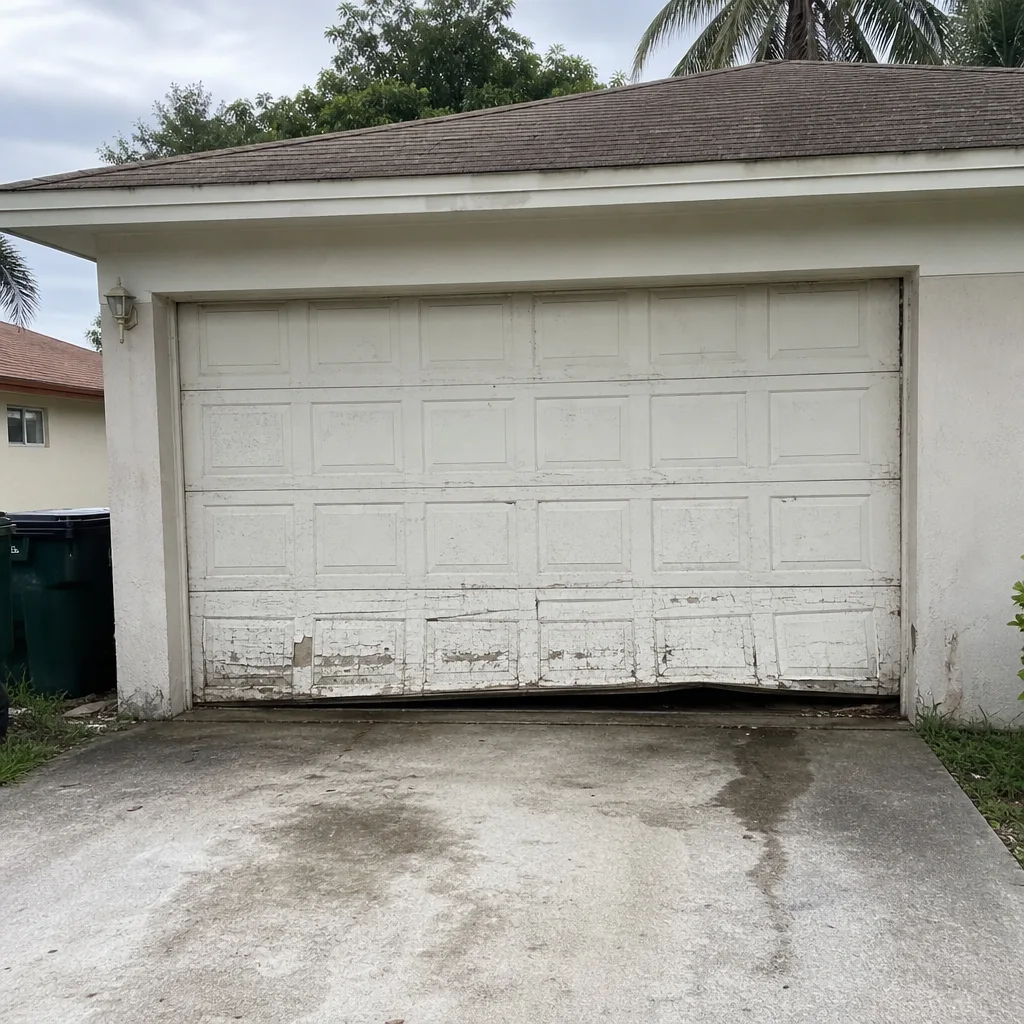 Before
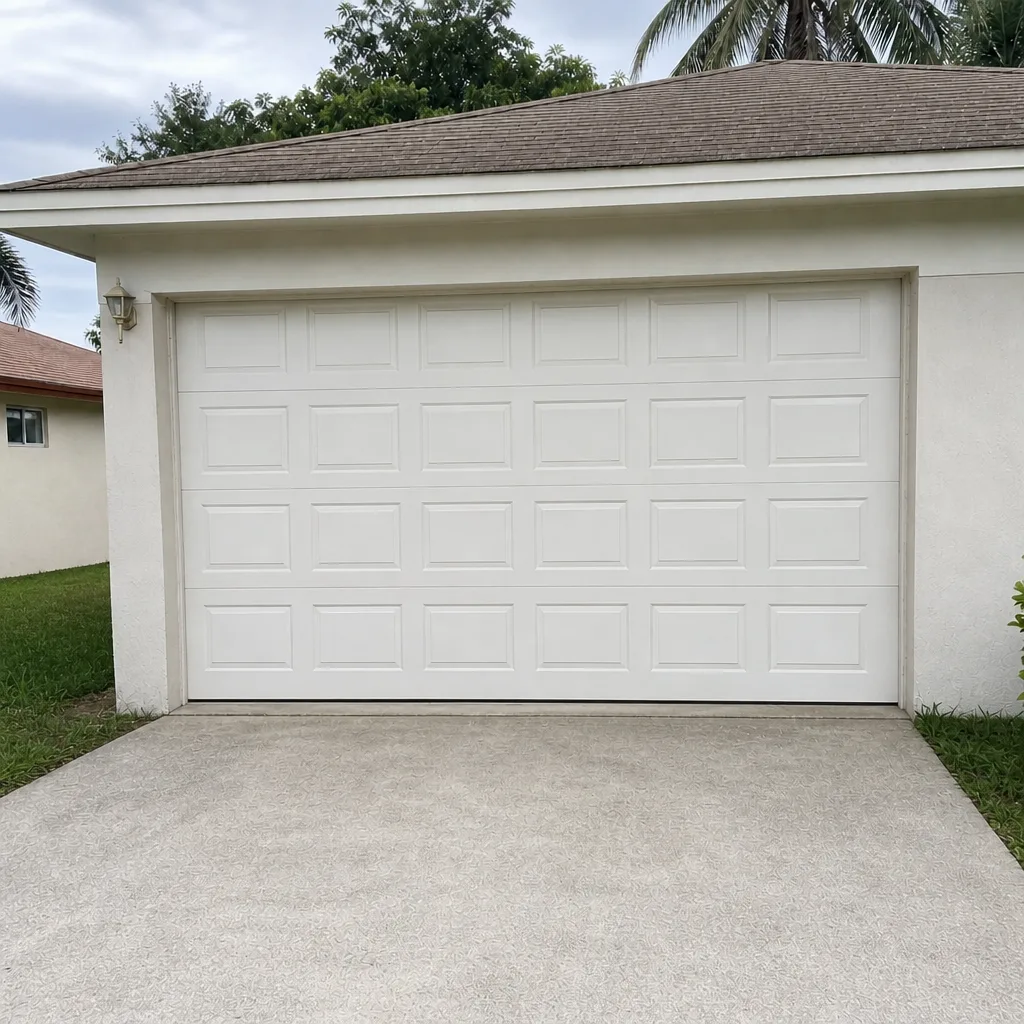 After
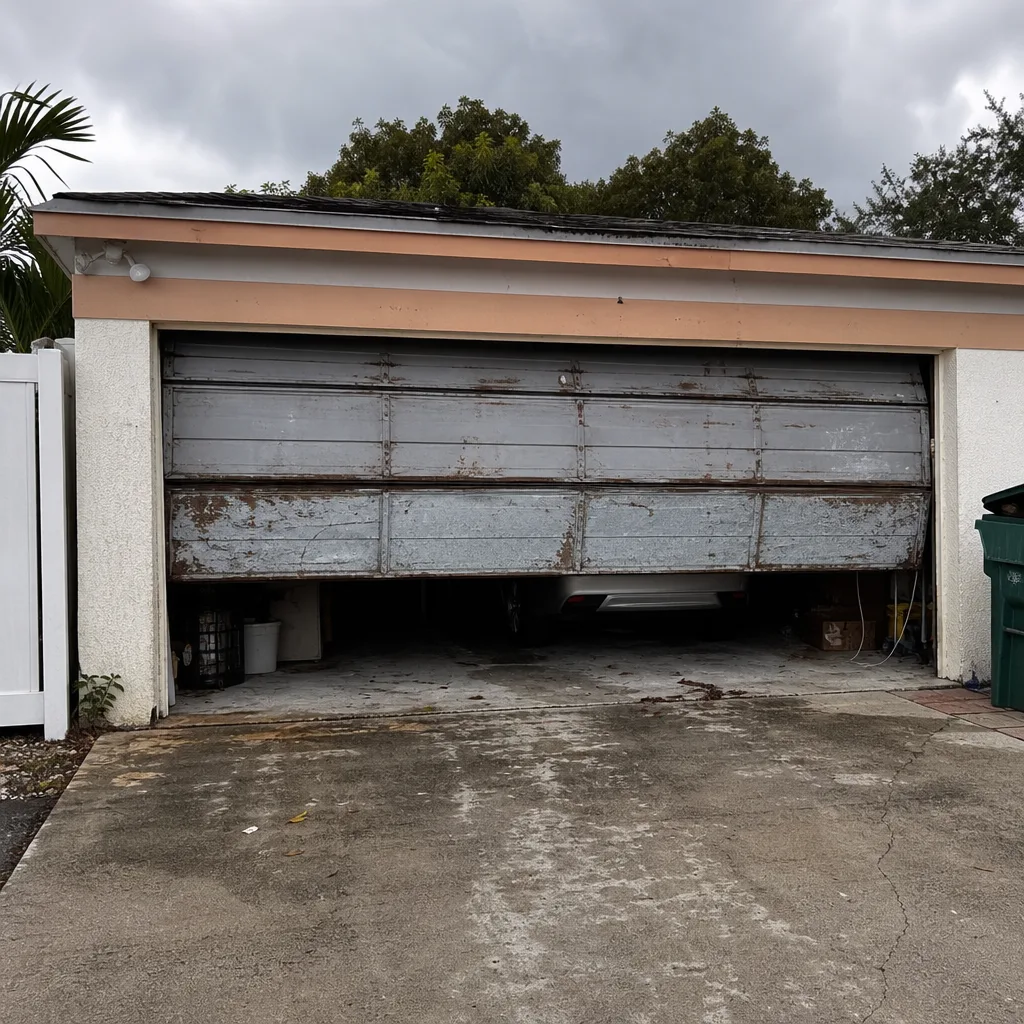 Before
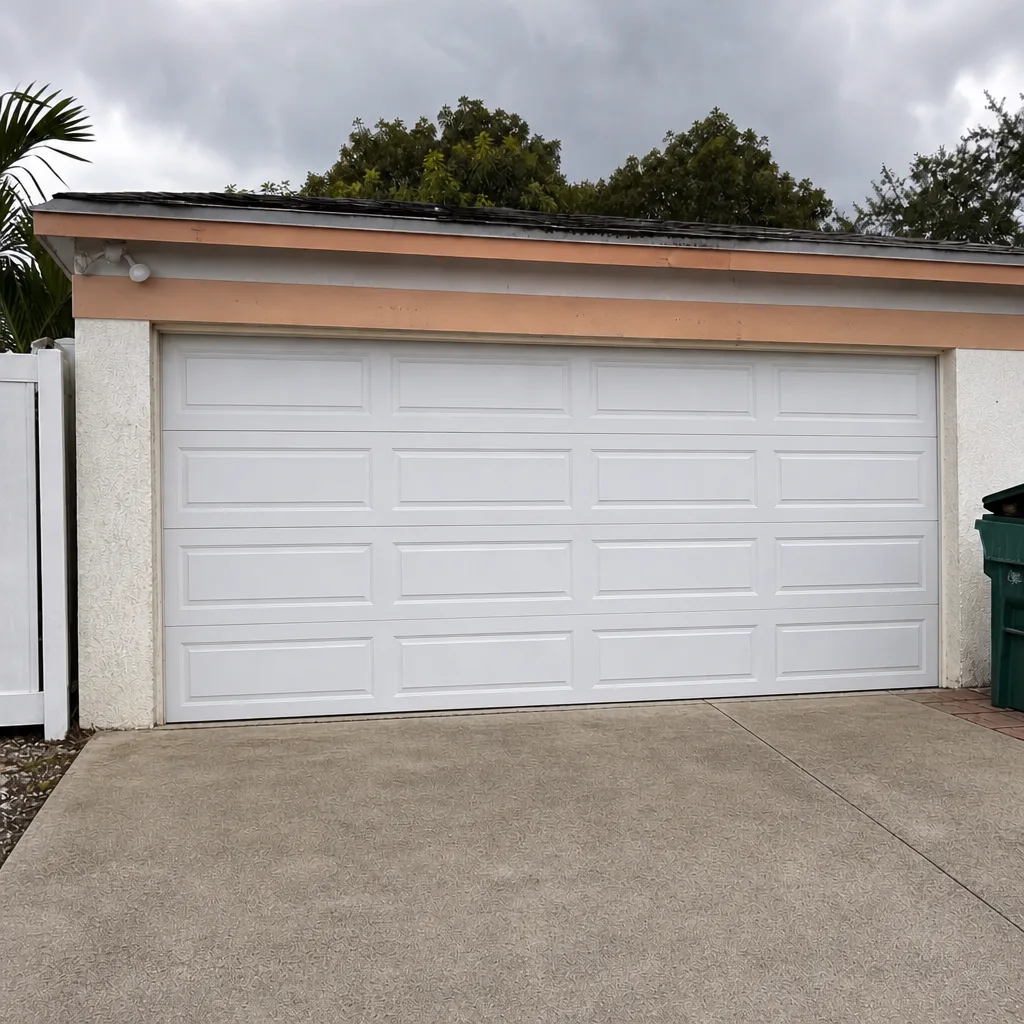 After
Common Mistakes to Avoid
- Forcing a binding door. If the door is hard to move or reverses repeatedly, pressing the button harder or more often puts the load on the opener’s gear train and usually turns a small repair into an opener replacement.
- Treating a loud pop as nothing. A pop at the start of a cycle is often a cable jumping or a spring winding unevenly. The next event may be a failure. Get it checked before you operate the door again.
- Ignoring a bottom seal in a humid climate. In Pembroke Pines, a flattened seal means rain on the floor every storm and slow rot behind the bottom panel. It’s the cheapest item on the list to fix and one of the most expensive to postpone.
- Assuming a slow opener is a battery problem. A short delay from one remote points to the remote, but a delay from every remote and the wall button points to the logic board.
- Watching for daylight gaps and assuming the track is fine. A gap usually means a track is out of plumb, not that the seal is bad. Replacing the seal alone won’t fix it.
- Letting a technician diagnose without describing the symptom. “It’s not working right” gets you a generic inspection. A specific description gets you a targeted one. Same visit, better outcome.
- Trying to replace a spring or adjust a cable yourself. This is one of the highest-risk DIY jobs in home maintenance.Stop-and-call isn’t caution, it’s the correct answer.
When to Call a Professional
Call a professional when the symptom appears in the stop-now list above: a door that won’t lift after a pop, a hanging cable, an off-track door, or a door that came down on its own. Call when an opener runs but doesn’t move the door, when the door reverses on a clear sensor path, or when any of these signs show up together with rust on the springs or cables. Call before a small fix gets expensive, because grinding and squealing that go untreated wear down the parts around them.
The right fix, not the fastest guess, is the standard we hold to. Garage Door Repair Pembroke Pines Pros offers free estimates in Pembroke Pines – call (844) 443-4021 to describe what you’re hearing and get an honest answer on whether it can wait for a scheduled visit or needs attention today.
Frequently Asked Questions
Grinding usually means worn rollers, dry bearings, or metal rubbing where it shouldn’t, most often on one side first. If the grind appears only at the top of travel, suspect a roller leaving its track, and it’s worth booking garage door repair before the wear spreads to the opener’s gear train. Call (844) 443-4021 for a free estimate.
A snapped spring, a hanging or kinked cable, a door off its track, or a door that won’t stay up all mean stop immediately. A loud pop followed by a door that won’t lift is a snapped spring, and springs and cables are under extreme tension. Don’t try to lift or adjust the door yourself; call for emergency service instead.
Humidity causes wood framing and metal brackets to expand and contract at different rates, which can shift the tracks and back off fasteners. That’s why a door that ran quietly in spring may start rubbing by August. It’s usually a track and hardware adjustment rather than a major repair, but it should be looked at before it binds.
A motor that runs without moving the door usually points to a stripped gear, a broken trolley, or an emergency release that wasn’t re-engaged. The door isn’t securing your home when this happens, so it’s a same-day priority. When the problem is in the opener, we handle garage door opener repair and are trained on your brand’s specific mechanism.
The written quote is the price. The price is agreed before any work starts, and the estimate visit is free. If a repair reveals a bigger problem, we explain what we found and give you a new written price before touching anything. You’ll never get an invoice larger than the quote you approved.
No, and this isn’t a tool-and-time issue. Torsion and extension springs store enough energy to cause serious injury, and releasing them safely requires professional tools and training. Our technicians have up to 13 years of experience, and spring work is where that experience matters most. Call (844) 443-4021 and we’ll handle it.
The Bottom Line
Garage door warning signs are specific, and precise language gets you a faster diagnosis, a more accurate quote, and protection against paying for parts you don’t need. Map the sound to the cause. Sort the visual signs into cosmetic and structural. Watch the opener for slow response, unexpected reverses, and a motor that runs without moving the door. And take the stop-now list seriously: snapped springs, hanging cables, off-track doors, and doors that won’t stay up get a call, not another test cycle. In Pembroke Pines, keep an eye on humidity-driven rust, seal wear, and seasonal track shifting. Do a seasonal check, describe what you find in plain terms, and use free estimates to get an honest answer before a small fix becomes a bigger one.
When something on this list shows up, call (844) 443-4021 for a free estimate. We handle every part of the door, from springs and openers to full installs, and we work on your brand.
Written by the team at Garage Door Repair Pembroke Pines Pros.