Last updated November 22, 2026
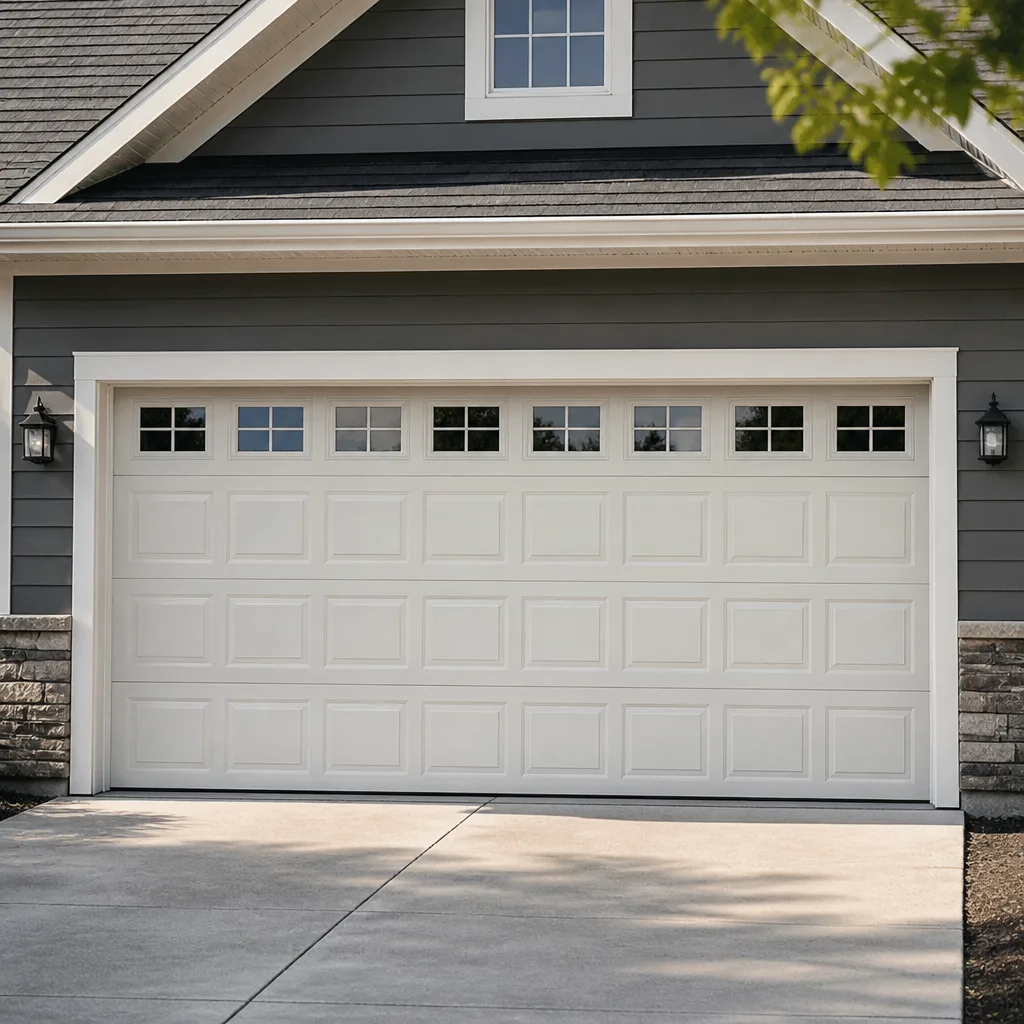 Raised-panel steel
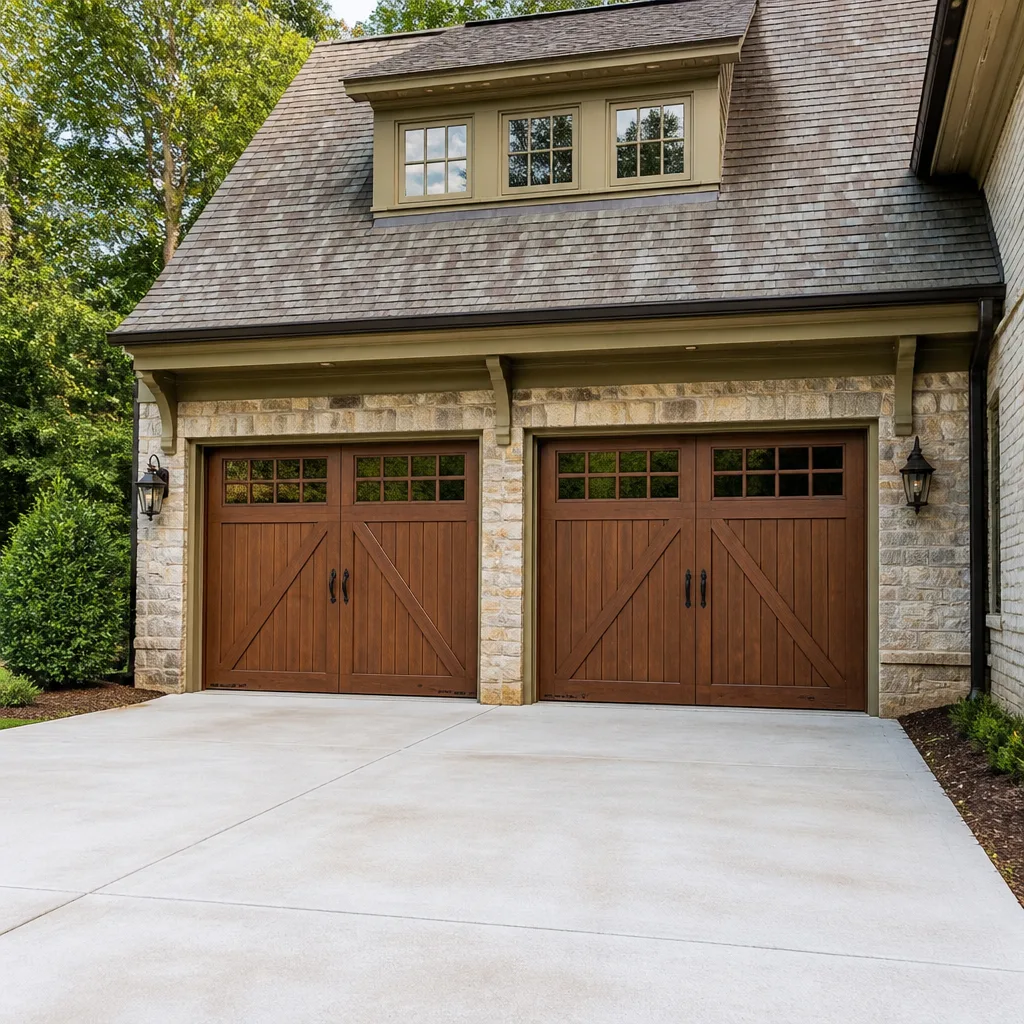 Carriage house
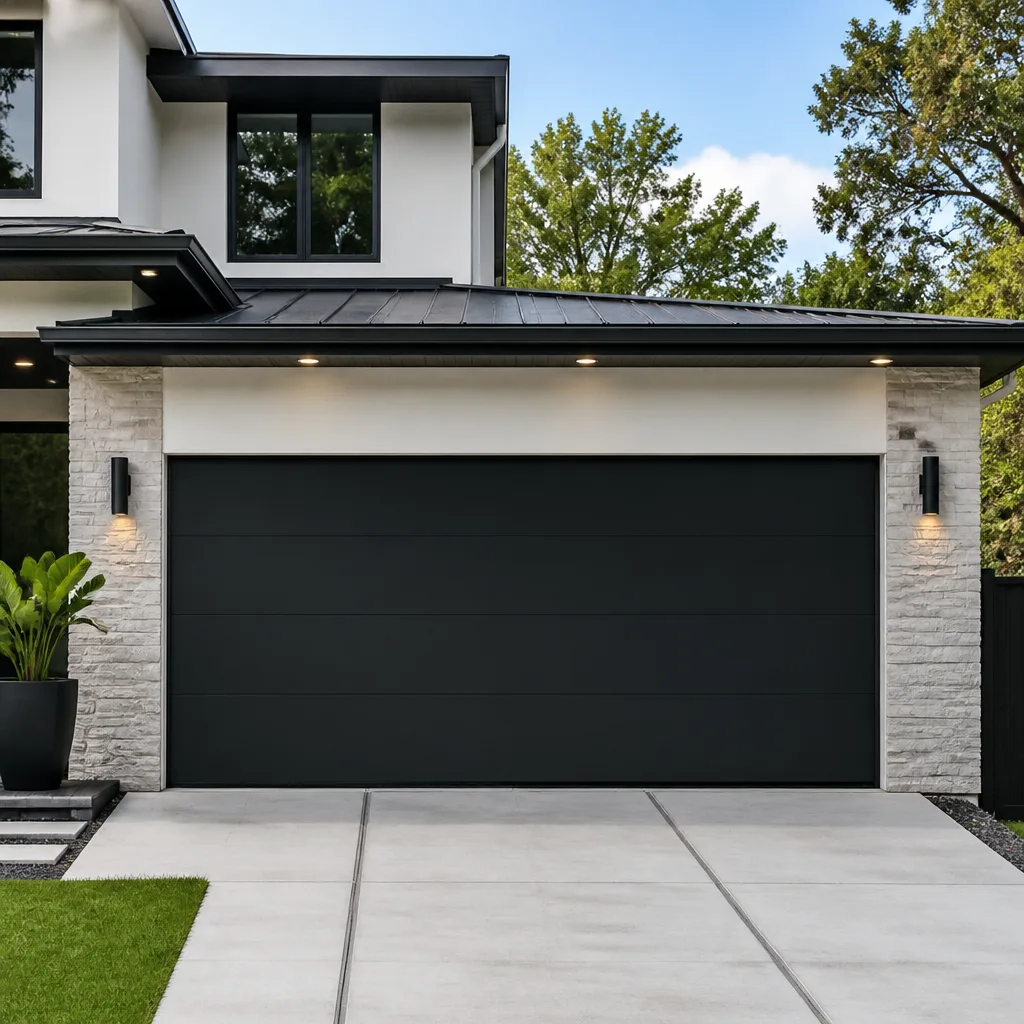 Modern flush
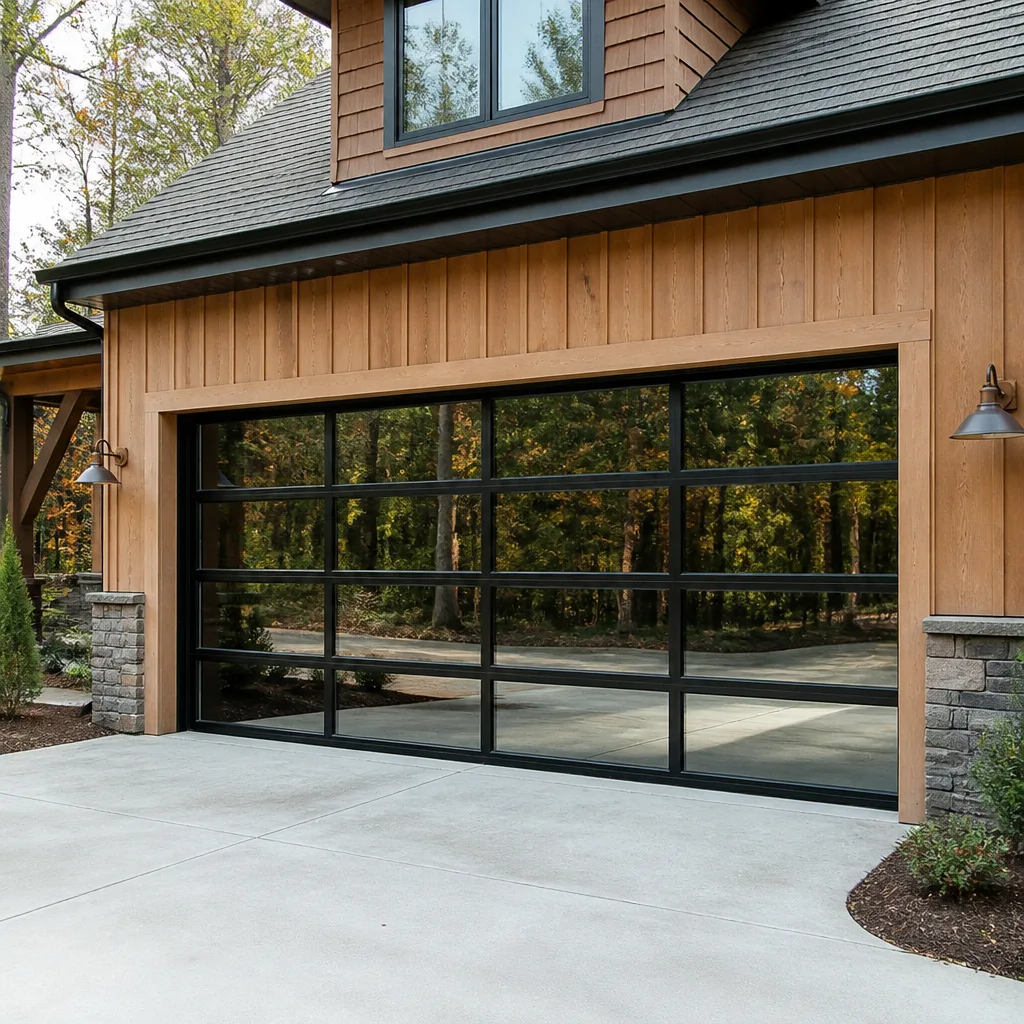 Full-view glass
 LiftMaster openers
 Chamberlain openers
Full 25-point door and opener safety check with every visit - springs, cables, rollers, tracks, and your LiftMaster or Chamberlain opener included
You get a price before we start. It does not change when the pro arrives.
Get your free estimateSeasonal Garage Door Care for Pembroke Pines: Year-Round Homeowner’s Guide
Most garage door maintenance advice you’ll find online was written for a climate that gets snow. It tells you to winterize, to watch for ice in the tracks, to prep for the cold. That advice doesn’t apply in Pembroke Pines, and following it means you’ll miss the two seasons that actually stress a garage door here. In South Florida, the year splits into a hurricane window and a dry-heat stretch, and each one wears on your door in different ways. This guide maps care to those two cycles so you know what to check, when to check it, and when a problem needs a trained technician. If you’ve been treating your door like it lives in Ohio, this is the guide for you.
Quick Answer
Garage door care in Pembroke Pines should follow two seasons, not four: pre-hurricane prep in May before the June 1 season opens, and dry-season attention from February through April when heat and low humidity cause contraction and binding. Rainy-season monitoring from June through October covers seals, drainage, and rust. Schedule professional service before hurricane season, not after.
Styles & brands we work with
- Raised-panel steel
- Carriage house
- Modern flush
- Full-view glass
- LiftMaster openers
- Chamberlain openers
Table of Contents
- Why Pembroke Pines Doesn’t Have a Northern Four-Season Cycle
- The May Pre-Hurricane Season Checklist
- Post-Storm Inspection: What to Do After Any Named Storm
- Dry-Season Care: February Through April
- Rainy-Season Tasks: June Through October
- When to Schedule Professional Service (and Why Timing Matters)
- Common Mistakes to Avoid
- When to Call a Professional
- Frequently Asked Questions
Why Pembroke Pines Doesn’t Have a Northern Four-Season Cycle
A garage door in Pembroke Pines lives a different life than one in a cold-weather city. Instead of spring thaw and winter freeze, it cycles through a humid, storm-heavy summer and a dry, hot late winter and early spring. Those two climates push on the door in opposite directions.
The rainy season brings moisture that works into seals, tracks, and hardware. The dry period pulls moisture back out, and everything that expanded when it was wet will contract. Wood panels shrink slightly. Gaps open. Springs, which are under constant tension, behave differently when the surrounding metal and wood change dimension. In our experience, binding and alignment complaints in Pembroke Pines cluster in the February-to-April window, right when the driest air settles in.
The hurricane season adds a third force: wind. Broward County sits squarely in the zone where homeowners track every named storm, and a garage door is the largest opening on most houses. That makes seasonal prep less about cosmetic upkeep and more about making sure your door and its hardware are sound before the first system forms.
So instead of a calendar built around snow, build your routine around these two windows:
- Pre-hurricane prep in May, before the season opens.
- Dry-season attention from February through April.
- Ongoing rainy-season monitoring from June through October.
- Post-storm inspection after any significant wind event.
Every section below maps to one of these windows. None of it asks you to winterize anything.
The May Pre-Hurricane Season Checklist
May is the single most useful month on the garage door calendar in Pembroke Pines. The hurricane season opens June 1, and once it does, scheduling gets harder for everyone. Getting ahead of it means checking your door while the weather is still calm and a technician has room to fix what he finds.
The checklist splits into things you can inspect yourself and things that belong in professional hands.
What you can check on your own
- Look at the hardware. Walk the door and look for loose hinge screws, worn rollers, and any bracket that’s bent or pulling away from the panel. Tighten what’s clearly loose, but don’t force a screw that’s stripped or a bracket that has pulled free of the door.
- Check the weather seal. Run a hand along the bottom seal and the perimeter if your door has one. A seal that’s cracked, torn, or no longer touching the floor lets wind-driven rain in and should be replaced before the season.
- Test the manual release. Pull the release cord with the door in the down position and confirm the door disengages and moves by hand. This matters during a power outage. If the door won’t disengage cleanly or feels unusually heavy when you lift it, stop and call a professional, because that heaviness usually points to a spring problem.
- Check wind-load hardware. If your door was built or rated for wind resistance, confirm the reinforcement hardware, brackets and struts are present, tight, and undamaged. If you’re unsure what rating your door carries, that’s a question for a technician who can read the door’s label and check the hardware against it.
What belongs with a professional
- Spring inspection and tension check. Torsion and extension springs are under extreme tension. We do not recommend homeowners adjust or inspect spring hardware themselves. A trained technician checks for stretch, wear, and correct balance.
- Track alignment and roller replacement. Tracks that are out of plumb or rollers that are worn cause the door to bind, and a binding door is more likely to fail under load.
- Opener force and travel settings. If the opener’s force limit is set too high, the door can keep pushing when it should reverse. A technician verifies the settings for your specific opener, whether it’s a LiftMaster, Chamberlain or Genie unit.
If any of that turns up a problem, fixing it in May is far simpler than fixing it in August when everyone in Pembroke Pines is calling at once. Our Garage Door Repair Pembroke Pines Pros team handles this kind of pre-season inspection as part of standard garage door repair work.
Post-Storm Inspection: What to Do After Any Named Storm
After a named storm or a significant wind event rolls through Broward County, your garage door deserves a look before you assume it’s fine. Doors can take impact or flex under wind load and still open and close, which means the damage isn’t always obvious from the driveway.
Work through this in order and skip anything that puts you near a spring or a moving door.
- Look before you touch. From outside, look at the panels for dents, cracks, or separation. Check the tracks for bends or debris. If a panel is cracked or a track is bent, don’t run the opener.
- Clear debris from the tracks. Palm fronds, twigs, and grit collect in the tracks after wind. Clear anything loose by hand, but don’t pry a bent track back into shape, since that usually makes alignment worse.
- Test the door by hand first. Disengage the opener with the manual release and lift the door slowly. It should move without grinding or binding. If it feels heavy, uneven, or stuck, stop and call a technician.
- Listen for new noises. A door that suddenly grinds, squeals, or slams is telling you something shifted. Don’t ignore a noise that wasn’t there before the storm.
- Check the opener’s response. After a power interruption, confirm the opener’s travel limits and force settings still work correctly. A door should reverse when it meets an obstruction. If it doesn’t, the opener needs professional attention.
- Look at the seals. Storm-driven rain can work into the bottom seal and perimeter seals. If water got inside, replace the seal rather than let moisture sit against the door.
If any step turns up damage, the right move is a professional inspection, not a self-repair attempt. That’s when our garage door opener repair team can come out and confirm whether the issue is the opener, the door, or both.
Dry-Season Care: February Through April
February through April is the driest stretch in Pembroke Pines, and it’s also when binding and alignment issues show up most. The humidity that kept everything expanded in the fall pulls back, and components contract. Wood doors are the most sensitive to this cycle.
How the dry season affects each part
- Wood doors: Panels and stiles shrink slightly as they dry, which can open small gaps at the seams and around the frame. Those gaps are a cue to check whether the door’s structural hardware has loosened. This is also the right window for a finish check on a wood door, so the surface stays sealed against the rainy season that follows.
- Panel gaps: Steel and composite panels can also shift as the mounting points expand and contract at different rates. Gaps that weren’t there in the fall should be looked at.
- Spring tension: A spring set for one season of humidity can feel different when the air dries out. If the door feels heavier or the opener has to work harder, the balance is off and should be checked.
A simple dry-season routine
- Walk the door and look at the seams. Note any new gaps or separations. Don’t fill them yourself; identify them so a technician can check whether the hardware has loosened.
- Test the balance. With the door disengaged, lift it to about halfway and let go. A balanced door should stay roughly in place. If it drops hard or shoots up, the springs need professional attention.
- Lubricate the moving parts. Rollers, hinges, and the track surface can take a proper garage door lubricant. Never lubricate the springs themselves or the opener rail’s chain unless the manufacturer says to.
- Check the opener’s responsiveness. Confirm the safety reversal still works by placing a solid object in the door’s path and closing it. If the door doesn’t reverse, stop using the opener and call for service.
- Confirm the hardware is tight. Tighten hinge screws that have worked loose, but stop if a fastener won’t hold. A stripped screw is often a sign the panel behind it is compromised.
If all of this turns up a loose panel, a failing spring, or an opener that responds slowly, addressing it during the dry season gives you weeks to fix it before rainy season. Prompt repair also prevents a small problem from turning into a bigger one, which is why our repair service stays busy in these months.
Rainy-Season Tasks: June Through October
The rainy season in Pembroke Pines brings near-daily storms and sustained humidity. The care routine shifts from checking gaps to keeping water away from the door and monitoring moisture-related damage.
Clear the drainage channel
Make sure the ground around the garage opening slopes away from the door. Leaf litter and debris collect against the threshold and can let water pool at the bottom seal. Clearing the area after heavy rain keeps water from staying in contact with the door.
Inspect the bottom seal
The bottom seal is your door’s first defense against water intrusion. Run a hand along it once a month during the rainy season and look for splits, tears, or gaps where the seal no longer meets the floor. A failed seal should be replaced, not patched.
Watch for rust
Humidity and moisture accelerate rust on metal hardware. Check the hinges, brackets, and track for rust spots and address them early. Touch up bare metal surfaces as needed. If rust has worked into a load-bearing part of the door, that part needs replacement, not a coat of paint.
A monthly rainy-season routine
- Clear the threshold and drainage path. Keep debris from collecting against the door.
- Check the bottom seal and perimeter seals. Replace anything that has split or pulled loose.
- Wipe down metal hardware and look for rust. Catch spots early.
- Test the opener’s safety reversal. Humidity and electrical issues can cause flaky behavior. Make sure the door reverses on contact.
- Listen for new noises. A grinding or squealing door during the rainy season usually points to a lubrication issue or a failing roller.
If rust has reached structural parts of the door, or if the seal keeps failing in the same spot, that’s a sign of a deeper alignment issue. The fix is a proper inspection, which is why our garage door repair service stays booked through the rainy season.
When to Schedule Professional Service (and Why Timing Matters)
Schedule your annual professional service in May, before hurricane season opens. That timing is deliberate and it’s the single biggest difference between a smooth season and a stressful one.
Here’s why it works. First, a pre-season inspection catches things while the weather is calm and the schedule is open. Once June 1 arrives, demand for garage door service in Pembroke Pines spikes, and appointment windows get tighter. Scheduling in May means you get service without the scramble.
Second, fixing a problem in May gives you the whole season to test the fix. If a replaced seal or tightened hardware works well through the first few storms, you know you’re in good shape. If something still isn’t right, you have time to address it before the peak of the season.
Third, a pre-season inspection is the right time to confirm your opener is behaving. Whether you have a LiftMaster, a Chamberlain, a Genie or a Raynor unit, the inspection checks that its force and travel settings are correct. A door that doesn’t reverse on a safety test is a real problem, and it’s the kind of thing that surfaces during a storm when you least want it to.
Our technicians are trained on those brands and know how their parts and programming differ, so the fix is the right fix rather than a workaround. Annual service should include:
- Spring inspection and balance check.
- Track alignment and roller condition.
- Hardware tightness, including brackets and reinforcement.
- Opener force and safety reversal testing.
- Seal condition on the bottom and perimeter.
- Lubrication of moving parts (never the springs).
If you want to look at a new door before the season rather than repair, the same timing applies. Our garage door installation team can measure your opening and walk you through options while there’s still time before storm season.
See the difference
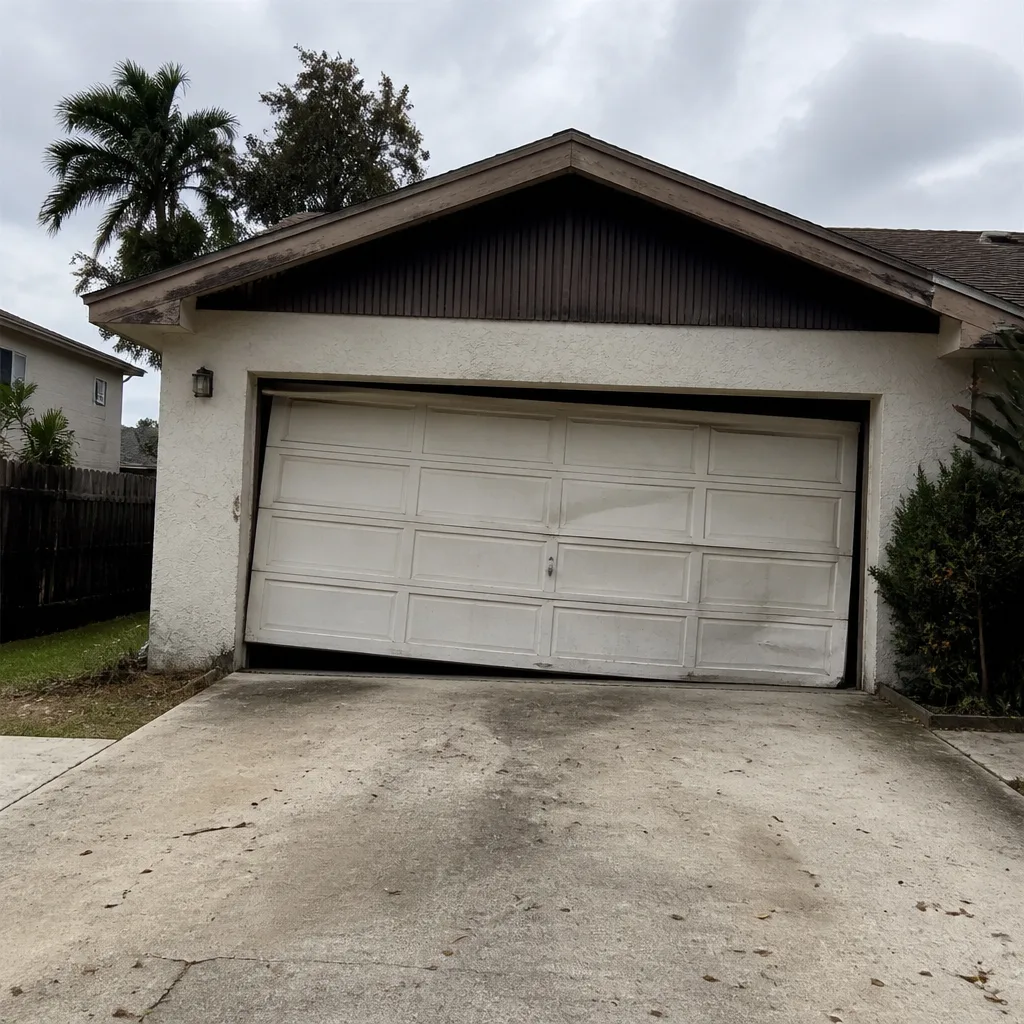 Before
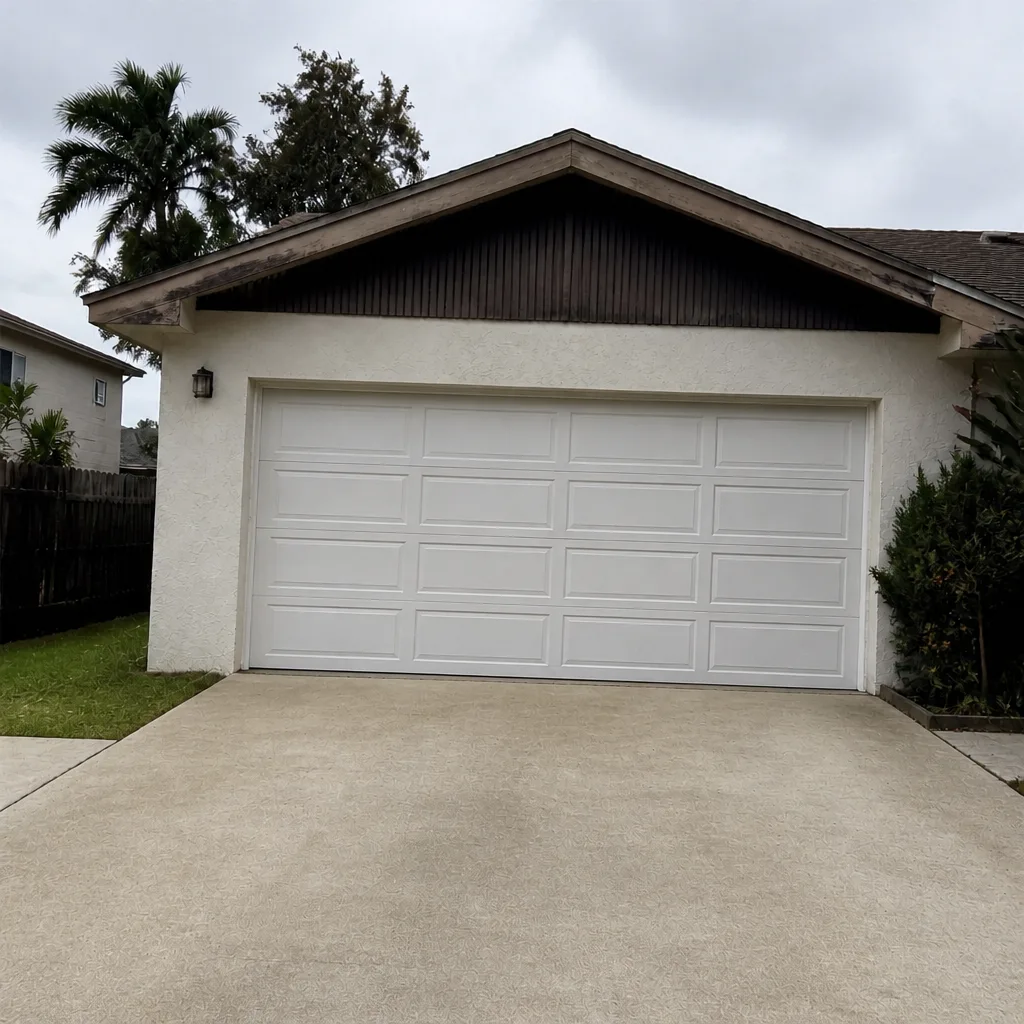 After
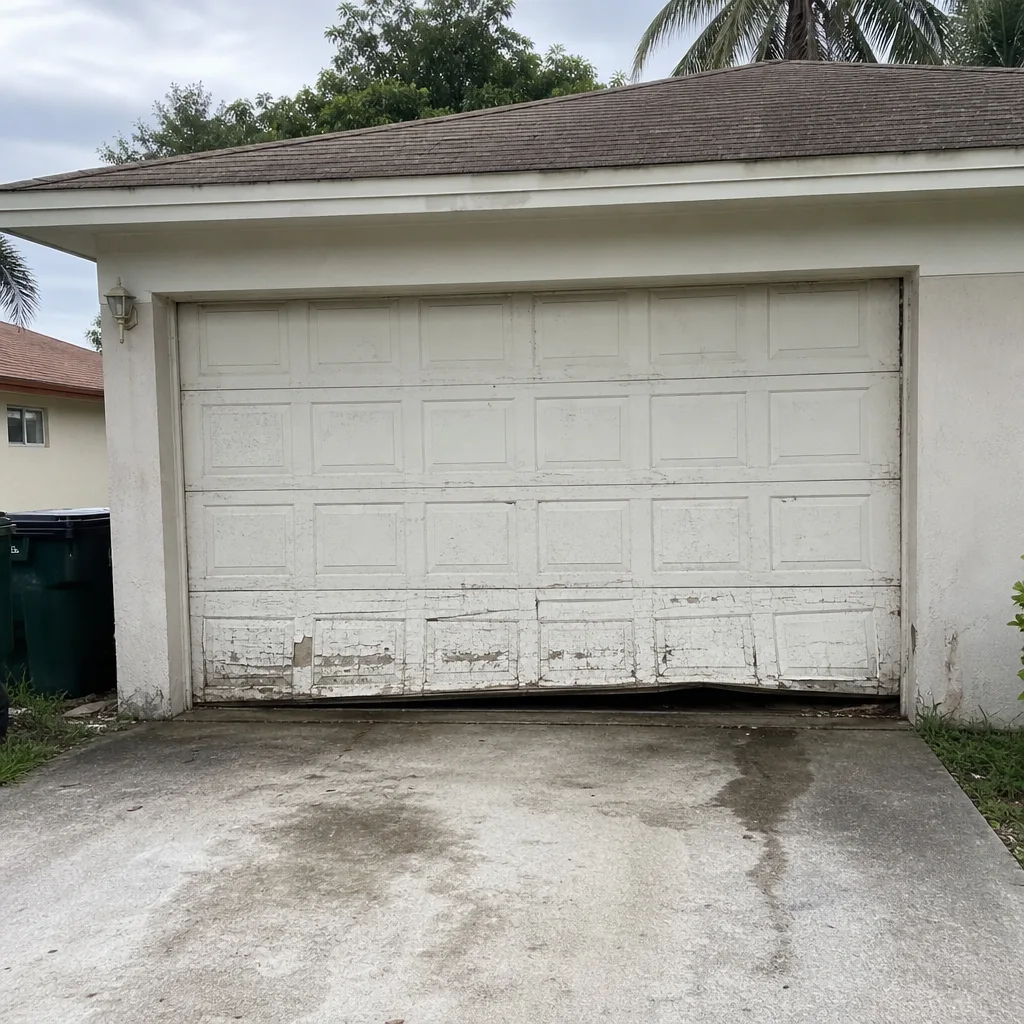 Before
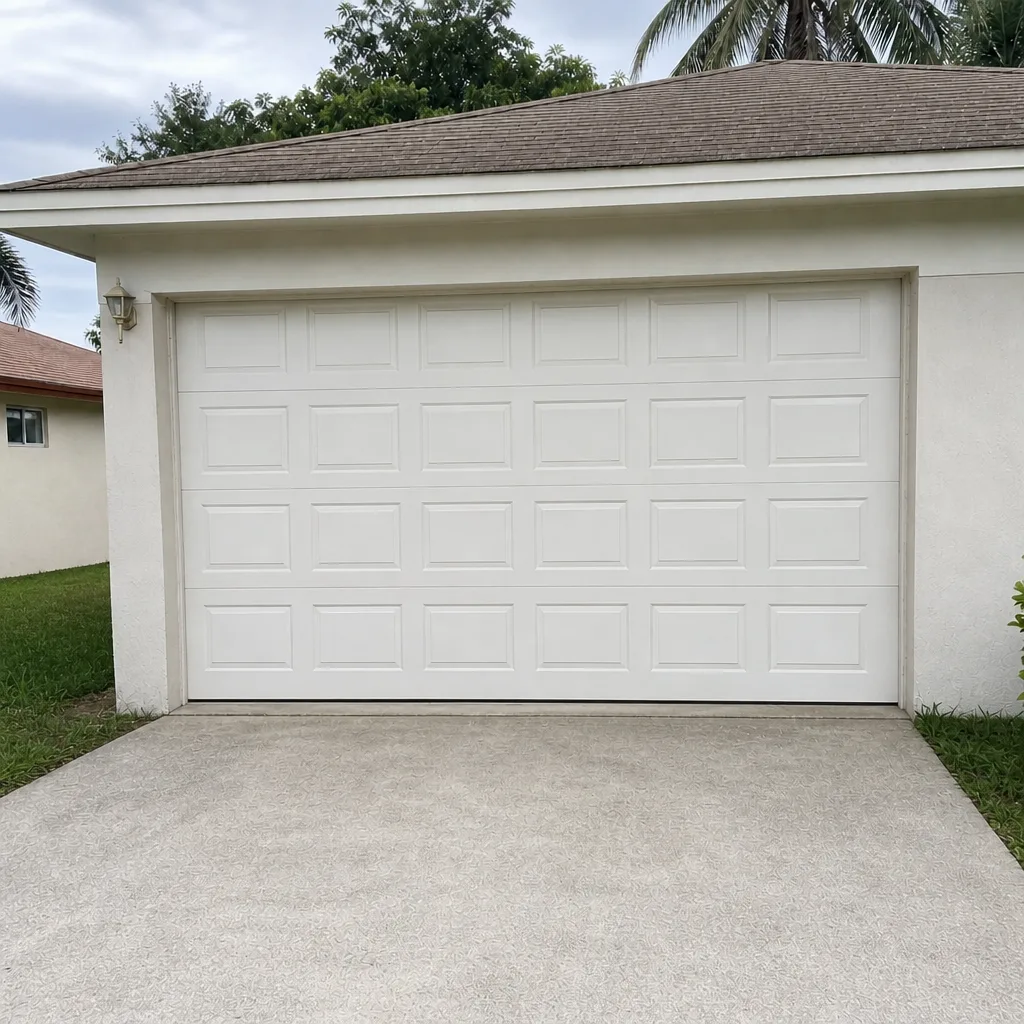 After
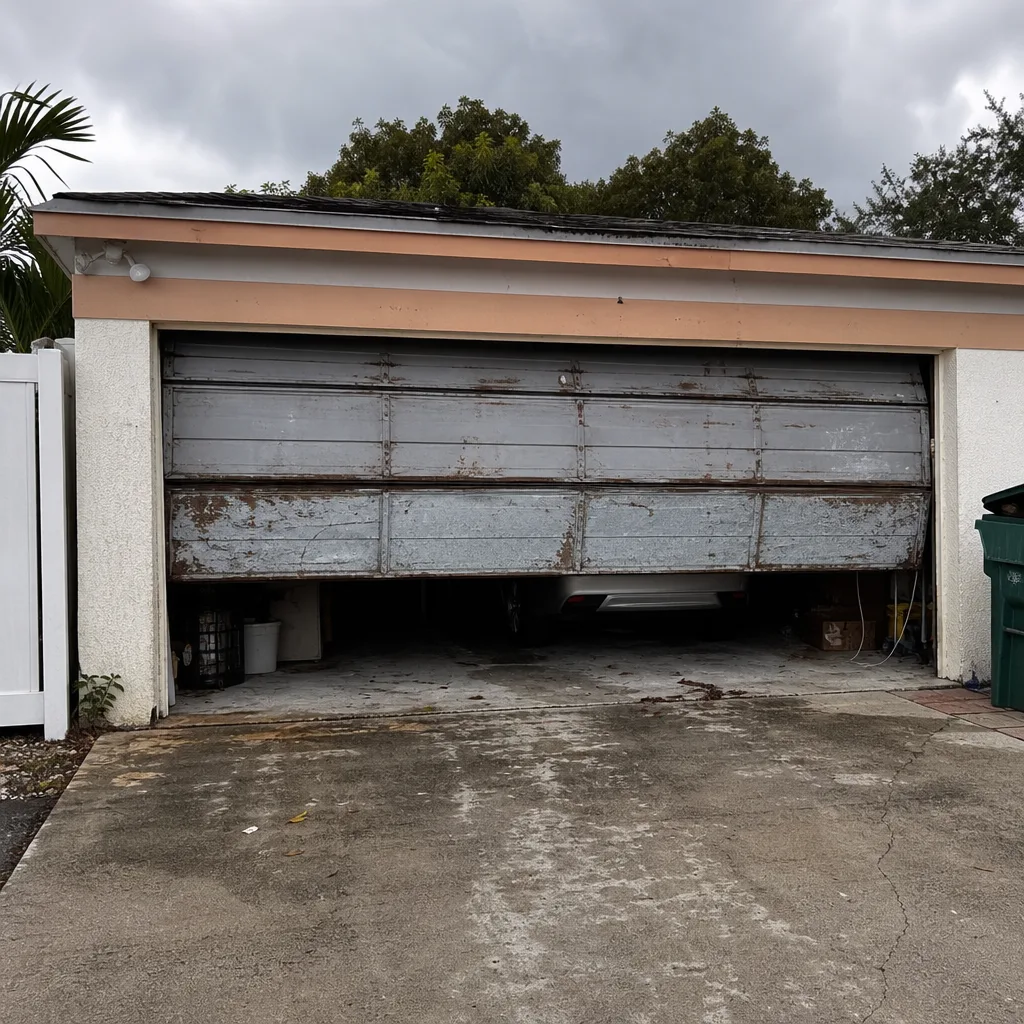 Before
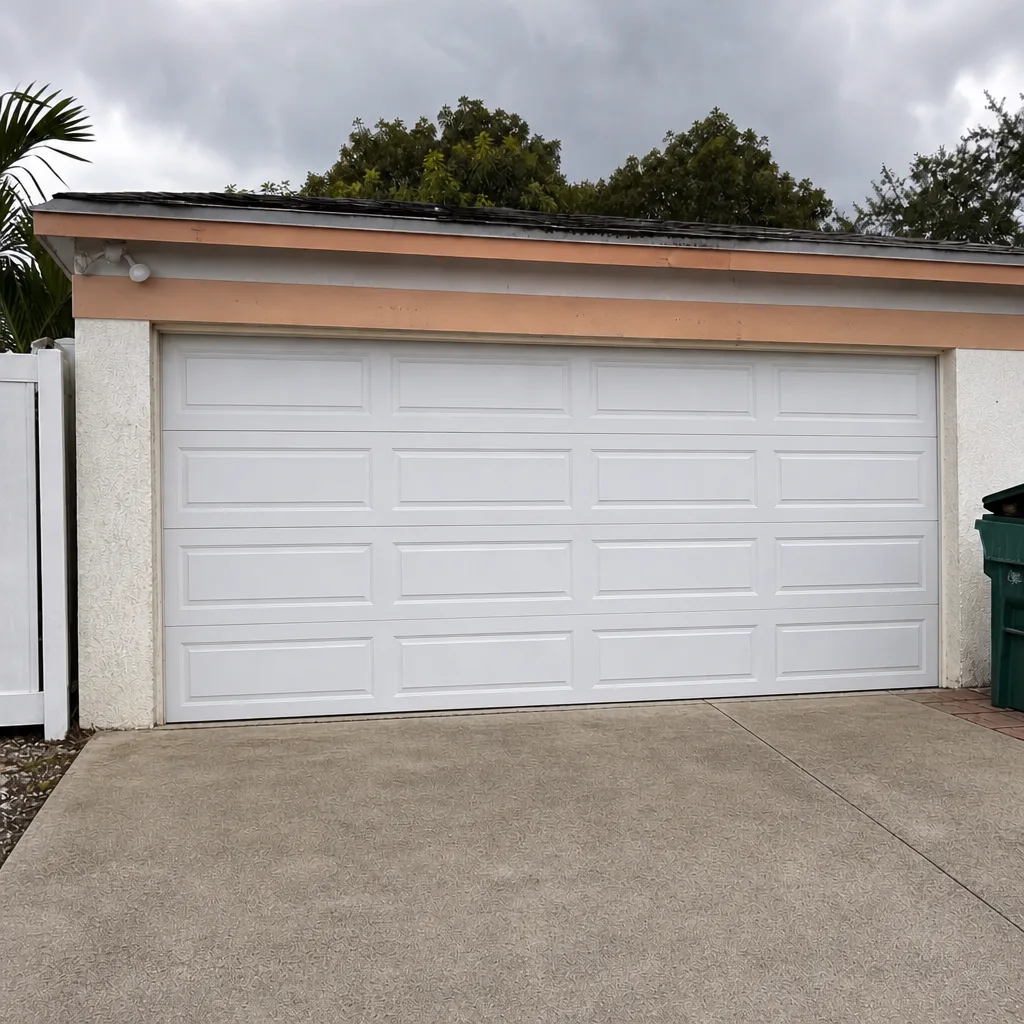 After
Common Mistakes to Avoid
- Treating winterizing advice as local advice. Winterizing content that assumes snow and ice doesn’t apply in Pembroke Pines, and following it wastes effort while you miss the humid-season problems that actually matter here. Build your routine around hurricane season and the dry season instead.
- Ignoring the door after a storm just because it opens. A door can take wind damage and still run. Check the tracks, panels, and seals after any named storm, even if nothing seems wrong.
- Lubricating the springs or the opener’s chain. Torsion and extension springs are under extreme tension and shouldn’t be handled or lubricated by homeowners. That’s a job for a trained technician.
- Adjusting spring tension yourself. Spring repair is one of the highest-risk jobs in the trade. Worn springs can release stored energy suddenly and cause serious injury. Leave spring work to a professional.
- Letting a small seal tear go. A split bottom seal lets water against the door and the slab, and it gets worse once the rainy season starts. Replace it early rather than after the first storm.
- Skipping the manual release test. The manual release is what gets you out of the garage when the power fails. If it won’t disengage, that’s a problem to fix in May, not during an outage.
- Assuming a binding door will fix itself. In our experience, doors that bind in the dry season don’t loosen on their own. Alignment tends to drift further, so the door should be inspected before it fails.
When to Call a Professional
Call a professional for anything involving springs, tension, opener programming, or structural damage to the door itself. Those are the areas where a self-repair attempt can turn a manageable fix into an injury. Our trained technicians have up to 13 years of experience and know the brands most commonly installed in Pembroke Pines homes, from Raynor to LiftMaster.
For homeowners in Pembroke Pines, Garage Door Repair Pembroke Pines Pros offers free estimates and can work with your insurer if a storm-related repair is covered. Call (844) 443-4021 to schedule a pre-season inspection or to get an exact quote on a repair.
Frequently Asked Questions
Pre-hurricane prep in May is the most important seasonal task in Pembroke Pines. That means checking hardware, replacing the weather seal, testing the manual release, and confirming wind-load hardware is intact before the June 1 season opens. After that, dry-season checks in February through April catch binding issues early, and monthly rainy-season monitoring keeps seals and hardware in condition.
Replace the weather seal as soon as it shows cracks, tears, or gaps where it no longer meets the floor. In Pembroke Pines, the rainy season accelerates wear on the bottom seal, so check it monthly from June through October. Replacing it before the season rather than after a storm is the simpler option.
Don’t. Garage door springs are under extreme tension, and an improperly handled spring can release stored energy suddenly and cause serious injury. Spring inspection, tension adjustment, and replacement belong with a trained technician. Our garage door repair team handles spring work with professional-grade tools and training.
Once a year, scheduled in May before hurricane season, is the right cadence for most Pembroke Pines homes. A professional service checks springs, tracks, rollers, hardware, seals, and the opener’s force and safety settings. If your door is older or has a known alignment issue, a second check during the dry season is worth doing.
Usually not. Power interruptions after a storm commonly reset an opener’s travel limits or force settings, and the fix is reprogramming rather than replacement. Our garage door opener repair service can diagnose whether the issue is the opener, the door, or the power supply and recommend the correct fix.
Yes. If your door carries a wind rating, confirm the reinforcement hardware is present, tight, and undamaged before the season. If you’re not sure what rating your door has, a pre-season inspection can read the door’s label and check the hardware against it.
The Bottom Line
Pembroke Pines garage doors don’t need a northern winter routine. They need attention mapped to the hurricane season and the dry-heat stretch. Prep in May, inspect after any named storm, check for binding and gaps during the February-to-April dry season, and monitor seals and hardware through the rainy months. Get the annual professional service done before hurricane season opens, not after. If you want a specialist to check your door before the season, call Garage Door Repair Pembroke Pines Pros at (844) 443-4021 for a free estimate. The right fix now beats a rushed repair later.
Written by the team at Garage Door Repair Pembroke Pines Pros.