Last updated November 22, 2026
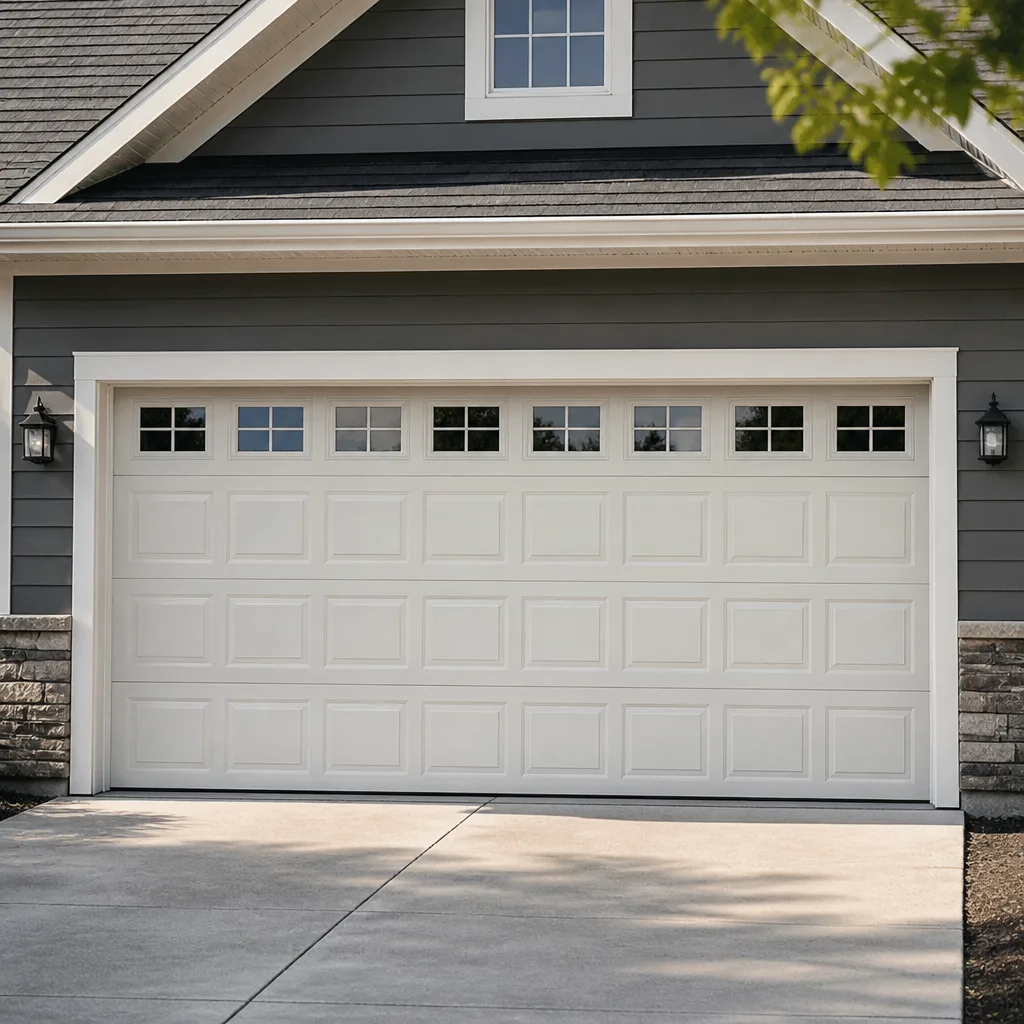 Raised-panel steel
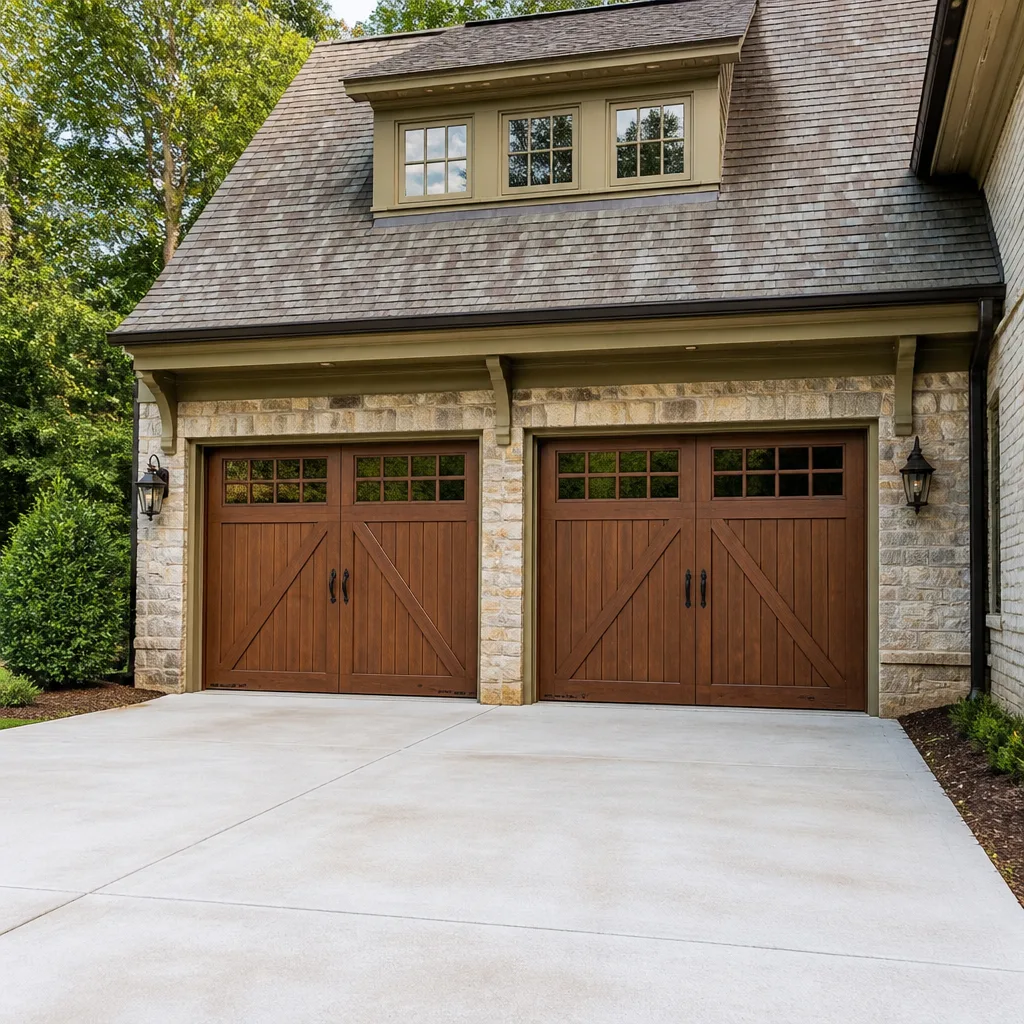 Carriage house
 Modern flush
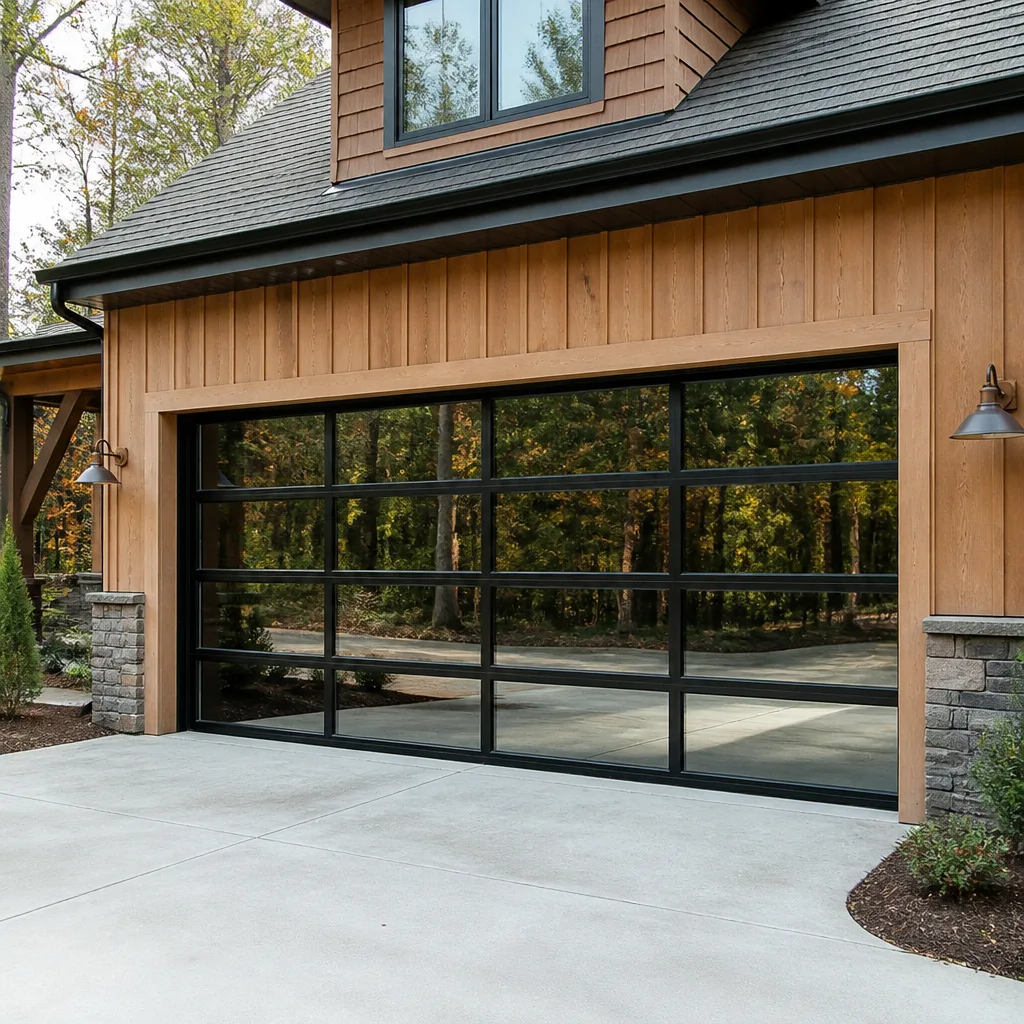 Full-view glass
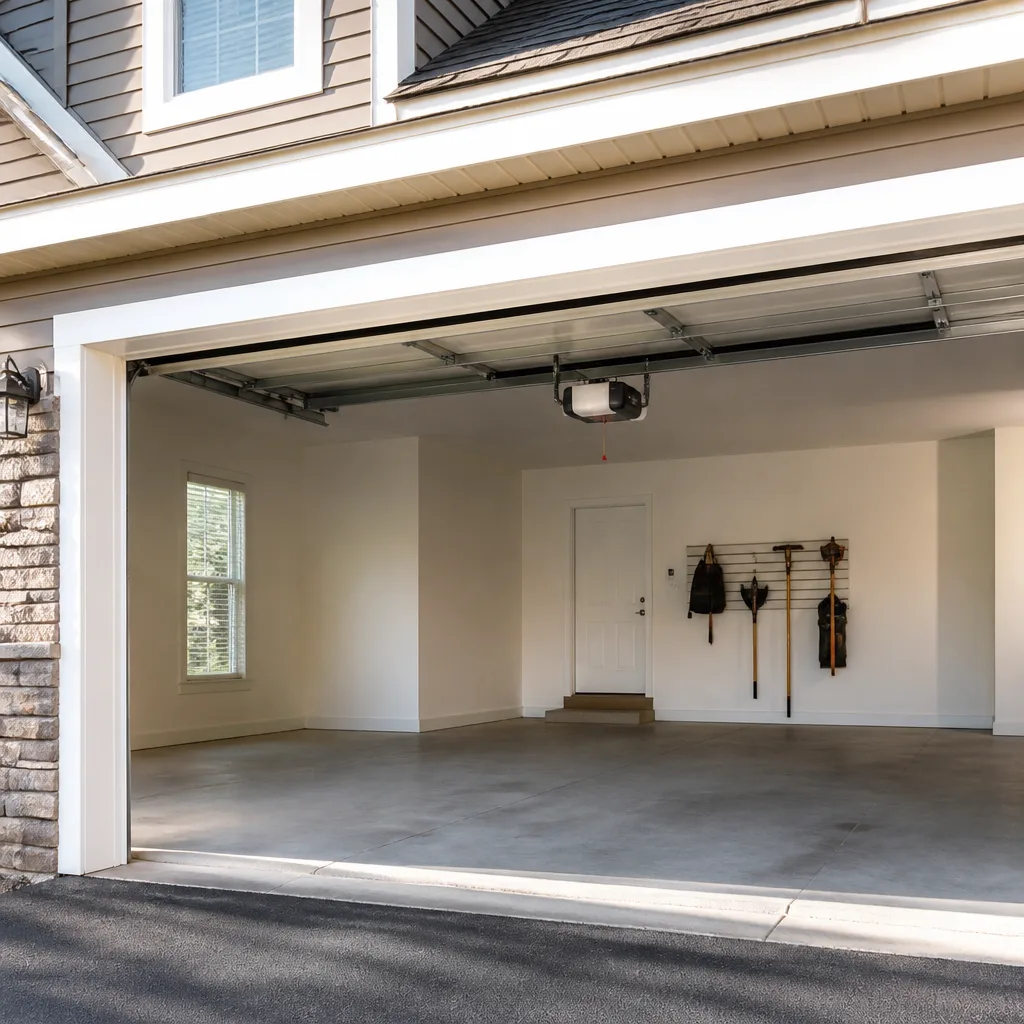 LiftMaster openers
 Chamberlain openers
Full 25-point door and opener safety check with every visit - springs, cables, rollers, tracks, and your LiftMaster or Chamberlain opener included
You get a price before we start. It does not change when the pro arrives.
Get your free estimateDIY vs Professional Garage Door: The Pembroke Pines Homeowner’s Decision Guide
Most homeowners who get hurt working on a garage door didn’t think they were taking a risk. They watched a video, bought a winding bar, and figured a spring is just a spring. The injury numbers behind garage door work are real, but in Pembroke Pines there’s a second, quieter reason to think twice that has nothing to do with your skill level: unpermitted replacement work can come back to bite you when you file a homeowners insurance claim after a storm. This guide draws a clear line through the jobs you can safely handle yourself and the ones that need a trained specialist, with Broward County inspection rules, warranty language, and local code in mind.
Quick Answer
You can safely handle weatherstripping, sensor alignment, lubrication, and basic remote programming yourself. You should not touch torsion or extension springs, cables, bottom brackets, or structural panel and track work; those jobs carry serious injury risk and, in Pembroke Pines, replacement work tied to Florida Building Code compliance can complicate your insurance. When a repair crosses that line, call a garage door specialist rather than a general handyman.
Styles & brands we work with
- Raised-panel steel
- Carriage house
- Modern flush
- Full-view glass
- LiftMaster openers
- Chamberlain openers
Table of Contents
- Why Pembroke Pines Is a Different Decision Than Most Cities
- The Task-by-Task Line: What You Can Fix and What You Can’t
- Springs and Cables: The Jobs That Send People to the ER
- Permits, the Broward 4-Point Inspection, and Your Insurance
- The Hidden Cost of a Botched DIY Repair
- Openers, Smart Home, and Where the DIY Line Sits for Tech-Confident Homeowners
- Using Manufacturer Warranty Terms to Decide
- How to Choose a Garage Door Professional in Pembroke Pines
Why Pembroke Pines Is a Different Decision Than Most Cities
Garage door advice you find online is usually written for a generic suburban house. Pembroke Pines isn’t generic. It’s a dense Broward County city where a large share of homes were built in the 1980s and 1990s, which means a lot of the garage doors here are now well into their second decade of daily use. Springs fatigue, bearings dry out, and openers from that era are reaching the end of their service life. That’s the practical reality behind most of the calls we take in Pembroke Pines: not a single dramatic failure, but hardware that’s simply worn out.
The housing stock matters in another way too. Many of these homes have single-car or tight two-car garages, so the door is often the main daily entrance for a family. When a torsion spring snaps, the household loses that entry point immediately, and the pressure to “just fix it fast” is what drives people toward risky DIY shortcuts.
Then there’s the climate. South Florida heat and humidity are hard on steel components, lubricant, and weatherstripping. A door that would need annual attention in a milder climate benefits from more frequent checks for rust at the hinges and track, and the weather seal along the bottom takes a beating from sun exposure and rain. That’s maintenance work, and most of it is genuinely homeowner-friendly. It’s the repair side that carries risk.
Our point of view is simple: the DIY-versus-professional question isn’t a test of whether you’re handy enough. It’s a question of which tasks carry injury risk or code and insurance consequences, and in Pembroke Pines the code side is the piece most homeowners don’t factor in at all. Keep reading and you’ll have a clear way to sort every garage door job into one of those two buckets.
The Task-by-Task Line: What You Can Fix and What You Can’t
Here’s the line in plain terms. If a task keeps your hands away from stored spring tension and off a door that can fall, it’s usually safe to do yourself. If it puts your hands, face, or body near a wound spring, a cable under load, or a door supported only by a track that could give way, it isn’t.
Genuinely homeowner-safe tasks in Pembroke Pines homes:
- Replacing the bottom weather seal and side weatherstripping (a common wear item in Florida sun).
- Aligning and cleaning safety sensors at the base of the door, and checking that the door reverses when blocked.
- Lubricating hinges, rollers, and the torsion spring with a proper garage door lubricant.
- Tightening loose hinge and bracket bolts (not the springs or cable drums).
- Programming a new remote or clearing out old remotes from an opener’s memory.
- Wiping down and lightly cleaning painted steel or aluminum panels.
Tasks that belong with a trained professional:
- Any torsion or extension spring replacement or adjustment.
- Cable replacement, and anything involving the bottom brackets where cables attach.
- Straightening a door that has come off its track, especially after a storm.
- Replacing bent or broken panels, since a new panel has to match load on the existing door.
- Adjusting the opener’s force or travel limits beyond the manufacturer’s basic settings.
- Any job on a door that’s sagging, making a loud bang, or won’t open evenly.
Notice that almost every unsafe task lives on the same small set of components: springs, cables, brackets, and tracks. That’s not a coincidence. Those parts hold and release the full weight of the door, and their failure is what turns a repair into an injury. Weatherstripping, sensors, and lubrication are the low-risk half of garage door work, and doing them yourself is a reasonable way to keep the door running smoothly between professional visits.
Springs and Cables: The Jobs That Send People to the ER
A torsion spring stores enough energy to move a door that weighs well over a hundred pounds, and it holds that energy even when the door looks closed and still. That stored force is why torsion spring work is one of the highest-risk jobs in home repair. When a spring is wound or released incorrectly, it can fail suddenly and violently.
The tools matter as much as the technique. Spring winding calls for the right winding bars, a proper understanding of the spring’s winding direction, and a way to count and hold turns safely. A DIY attempt with the wrong bar or a slip of the hand is exactly the scenario behind most garage door spring injuries. Our technicians are trained on spring replacement specifically, and they use professional-grade tools and controlled procedures so the stored energy is managed rather than released. Our technicians have up to 13 years of experience on the tools, which is the kind of tenure that turns a hazardous job into a routine one.
Cables are the second hazard to respect. The cable connects the bottom bracket to the drum that winds the spring, and it sits under tension whenever the door is closed. A cable that frays or snaps can whip free. Never reach into a cable path, never try to re-seat a cable by hand, and never remove a bottom bracket on a door that still has tension in it.
What should you actually do when a spring breaks? The safe move is to stop operating the door and call. In Pembroke Pines, we handle garage door spring repair as a core specialty precisely because it’s the job that requires the most careful hands. If a spring fails, the door may still open partway with the opener’s help, and it can drop without warning. Don’t keep forcing it. A trained technician diagnoses the failure and replaces the spring safely rather than working around it.
Other difficult, less obvious jobs fall in the same bucket. Straightening a racked door, replacing bent panels so they carry the same load, and re-leveling a door that’s started to rest on one side all take a trained hand. If your door has any of those symptoms, a professional diagnosis is the starting point, not a YouTube tab.
Permits, the Broward 4-Point Inspection, and Your Insurance
Here’s the part most DIY advice leaves out. In Pembroke Pines and across Broward County, garage door replacement and certain structural repairs are governed by the Florida Building Code, and doing that work without a permit leaves you exposed in ways that only surface after a storm or a policy renewal.
A 4-point inspection looks at four systems of a home: the roof, electrical, plumbing, and HVAC. Garage door work isn’t one of the four points directly, but inspectors and insurers pay attention to the overall condition and any signs of unpermitted structural work. If a garage door replacement was done without a permit and the inspector or your insurer catches the mismatch, that can create friction around your coverage. Insurers care about whether the home’s structural openings were installed to code, and a garage door is a structural opening. When a hurricane claim puts a damaged door under scrutiny, an installer’s permit records are exactly what a homeowner needs to show the work was done properly.
That’s why the “I’ll just swap the panel myself” instinct can turn into a real headache in Pembroke Pines. Some structural and replacement work needs a permit, and the rules are set by the local building department, so the right move is to ask before you start. A specialist who does this work regularly knows which jobs need a permit and can point you to the answer for your specific home.
What you can safely do on your own doesn’t trigger any of this. Replacing weatherstripping, aligning sensors, and lubricating moving parts are maintenance. Where DIY gets risky is the moment you’re replacing or structurally altering the door itself, because that’s where permit and code questions enter. If you’re unsure which side of that line a job falls on, a free estimate is a low-cost way to get a straight answer. Garage door installation is the category that most often needs a permit, and Pembroke Pines homeowners should plan for that rather than guess.
The Hidden Cost of a Botched DIY Repair
A failed DIY repair usually doesn’t just cost the price of the part. It costs more than the original professional job would have, because now the technician has to undo the damage and then do the repair correctly.
Take a spring replacement that goes wrong. If a substitute spring of the wrong gauge or winding is installed, the door will operate unevenly, the opener will strain, and the whole system goes out of balance. A professional then has to remove the wrong spring, source the correct one for that specific door, re-wind it to the right tension, and often rebalance the door. That’s more labor than the original job, and the door now has extra wear on the opener, hinges, and rollers.
A misaligned track is another common one. A door that jumps the track or rests askew can damage the panels’ edges and the rollers. If someone tries to straighten it with force and the door drops, a track repair can turn into a panel replacement. And an opener that was programmed with the wrong limits or force settings will keep straining a door that isn’t balanced, which shortens the opener’s life.
The pattern is the same every time: the cheap DIY fix creates a bigger, trickier repair, and the hidden cost shows up later in a higher bill or a shorter service life. We’ve seen it often enough on Pembroke Pines doors to know that the fast guess is rarely the cheaper path. The right fix, done once, is the better value.
Openers, Smart Home, and Where the DIY Line Sits for Tech-Confident Homeowners
Opener programming is the friendliest territory for a confident DIYer, right up to the point where a firmware or compatibility issue shows up. Pairing a remote, setting travel limits through the opener’s own buttons, and connecting an opener to a smart home app are all reasonable tasks for someone comfortable with the tech.
The line gets crossed when the door moves unevenly or the opener behaves inconsistently. That’s often not a programming problem at all. It’s a symptom of an unbalanced door, a worn spring, or a sensor issue. Re-programming an opener won’t fix a mechanical imbalance, and forcing it to compensate by increasing the force setting only wears the opener faster.
Brand and model compatibility is the other place DIY confidence runs out. LiftMaster and Chamberlain openers share a lot of underlying technology and MyQ app integration, but their remotes and accessories aren’t always interchangeable. Older Craftsman openers use remote frequencies that don’t match newer accessories, and a Genie opener’s programming sequence is different again. When you’re mixing a newer accessory into an older system, working from the wrong manual wastes time and can leave the opener in a state you can’t easily reset.
Our technicians are trained on LiftMaster, Chamberlain, Genie, Clopay, Amarr, Wayne Dalton, Craftsman, and Raynor products. That matters for garage door opener repair because the right fix often depends on how that specific brand and model handles limits, force settings, and accessory pairing. When a firmware issue or a compatibility problem has you stuck, a brand-familiar technician gets to the answer faster than trial and error. If your opener is still struggling after a battery change and a reset, it’s worth the call.
Using Manufacturer Warranty Terms to Decide
Read the fine print on your door or opener before you start a repair, because warranty terms often settle the DIY question for you. Many manufacturers void coverage when the product is installed or repaired by someone who isn’t an authorized professional, and some void it the moment a non-authorized part is used.
Here’s how to use that in practice:
- Find the door or opener’s owner’s manual or warranty card and look for the installation and repair language.
- Note whether the warranty requires professional installation for coverage to apply at all.
- Check whether the warranty covers parts only or also labor, since a voided labor warranty is often the bigger loss.
- Look for any exclusion tied to non-authorized parts or accessories.
- Keep your installation and repair paperwork with the home’s records; it protects you at resale and inspection time.
If your door is still inside its warranty period, DIY repair can quietly cost you a covered repair or even a covered replacement later. That’s a strong argument for a professional on anything warranty-sensitive. It’s also a good reason to keep the receipt from a professional job. When a manufacturer requires authorized installation, using a technician familiar with that brand is how you keep coverage intact.
How to Choose a Garage Door Professional in Pembroke Pines
Once you’ve decided a job belongs with a professional, the next question is how to pick one. A garage door specialist is a better fit than a general handyman for anything involving springs, cables, tracks, openers, or installation, because that’s all they do.
A few things to check before booking:
- Specialist focus. The company should work on garage doors and openers, not “everything.”
- Brand familiarity. Ask whether they work on your specific door and opener, and be wary of a vague answer.
- Written estimate before work. You should get a clear price before anything starts.
- Spring and cable readiness. A company that treats spring work as routine is a safer bet than one that treats it as unusual.
- Licensing and insurance. The local pro should be licensed and insured as their state requires.
A specialty company also covers the whole system, so a repair that reveals a bigger problem doesn’t require a second call. If your door is at the end of its life, that same company can handle garage door installation and get the work done to code. And when a door fails suddenly, a company that offers emergency response is the one you want on the line.
Common Mistakes to Avoid
- Trying to wind a torsion spring yourself. A spring holds enough force to injure you badly, and it can fail without warning. Leave springs to a trained technician with the right tools.
- Reaching into a cable path. Cables sit under tension whenever the door is closed, and a frayed cable can snap. Don’t try to re-seat or replace one by hand.
- Replacing a door or panel without checking on permits. In Pembroke Pines, replacement work can require a permit, and skipping it can create problems with insurance and inspections later. Ask the building department before you start.
- Using a general handyman for spring or structural work. This work calls for garage door specialist tools and training, and a generalist often has neither.
- Increasing opener force to mask a problem. If the door is unbalanced, raising the force setting just strains the opener and hides the real issue.
- Installing the wrong part to save a trip. A mismatched spring gauge or an incompatible remote can lead to a bigger repair and can void a warranty.
- Skipping the maintenance basics. Neglected weatherstripping, dry hinges, and dusty sensors in Pembroke Pines’s heat and humidity quietly shorten a door’s life. These are the jobs you can safely do yourself.
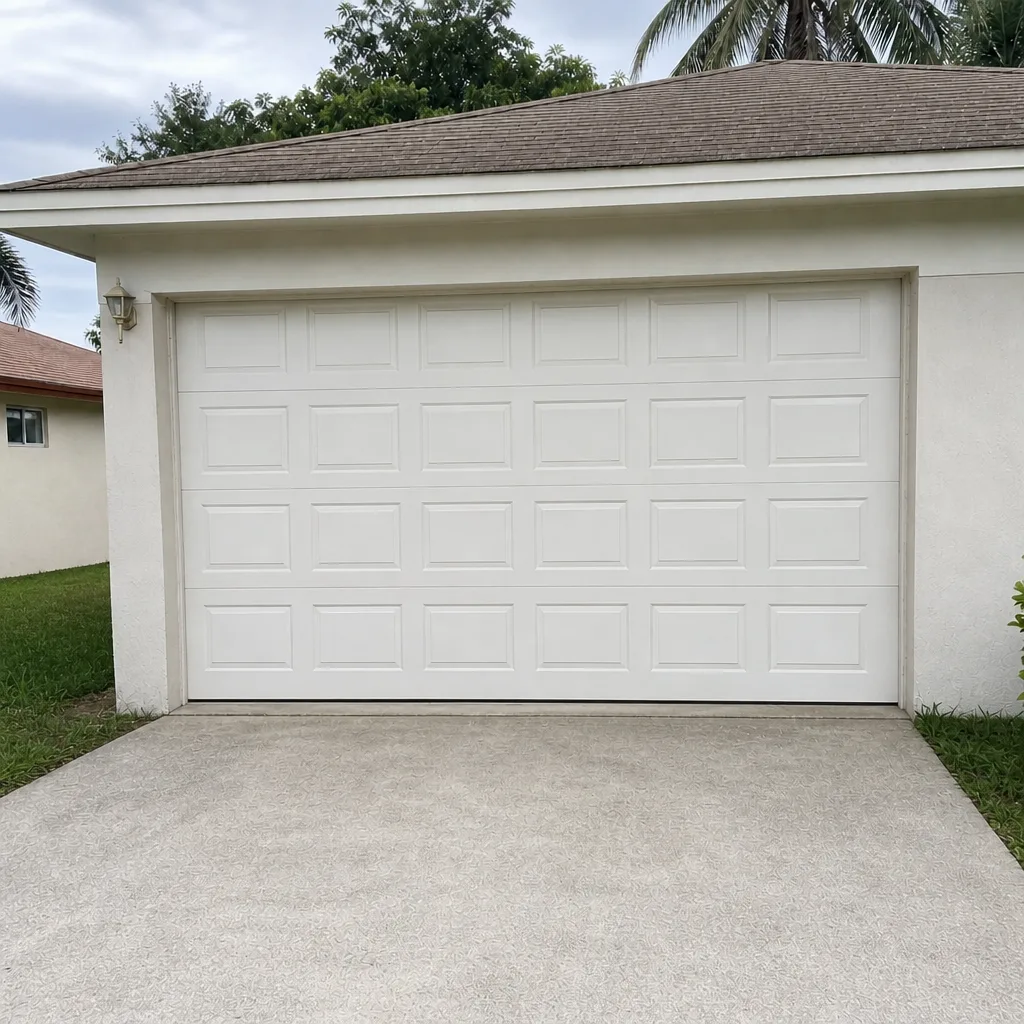
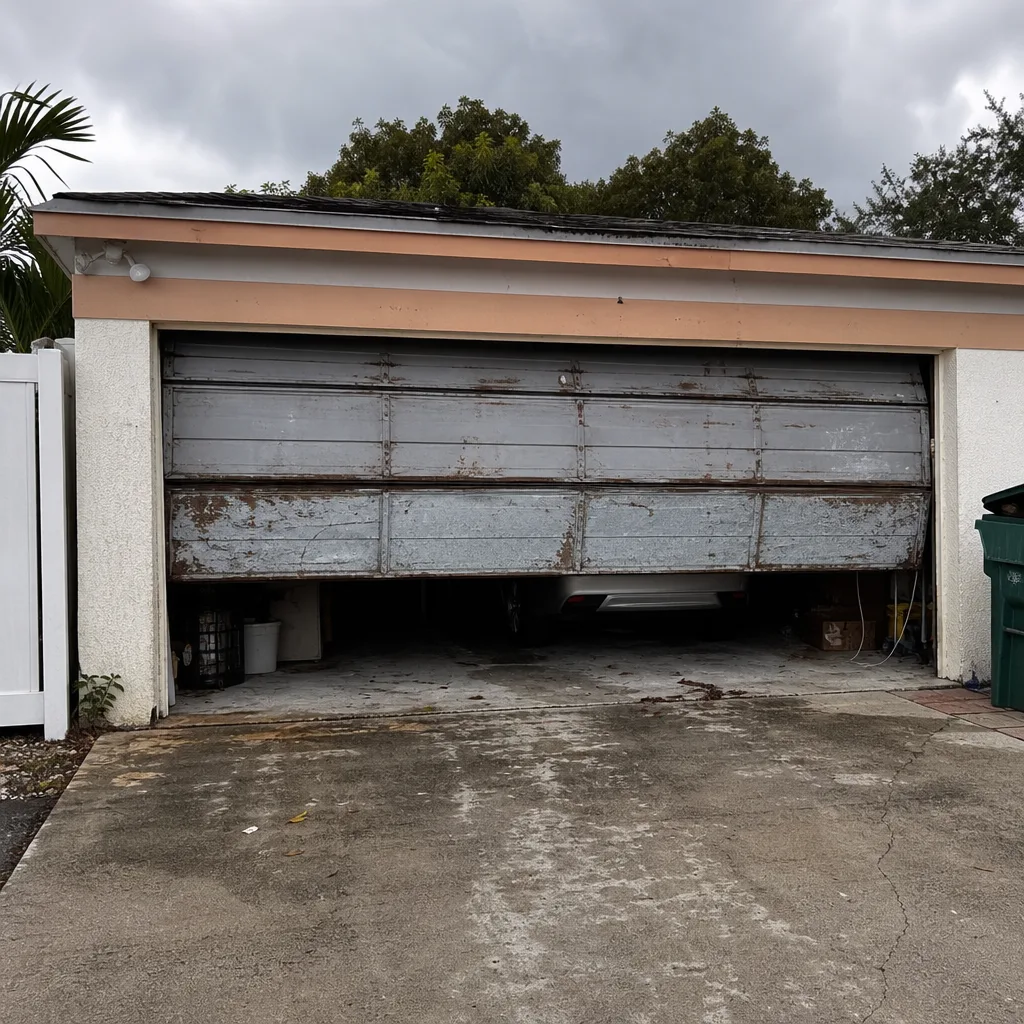
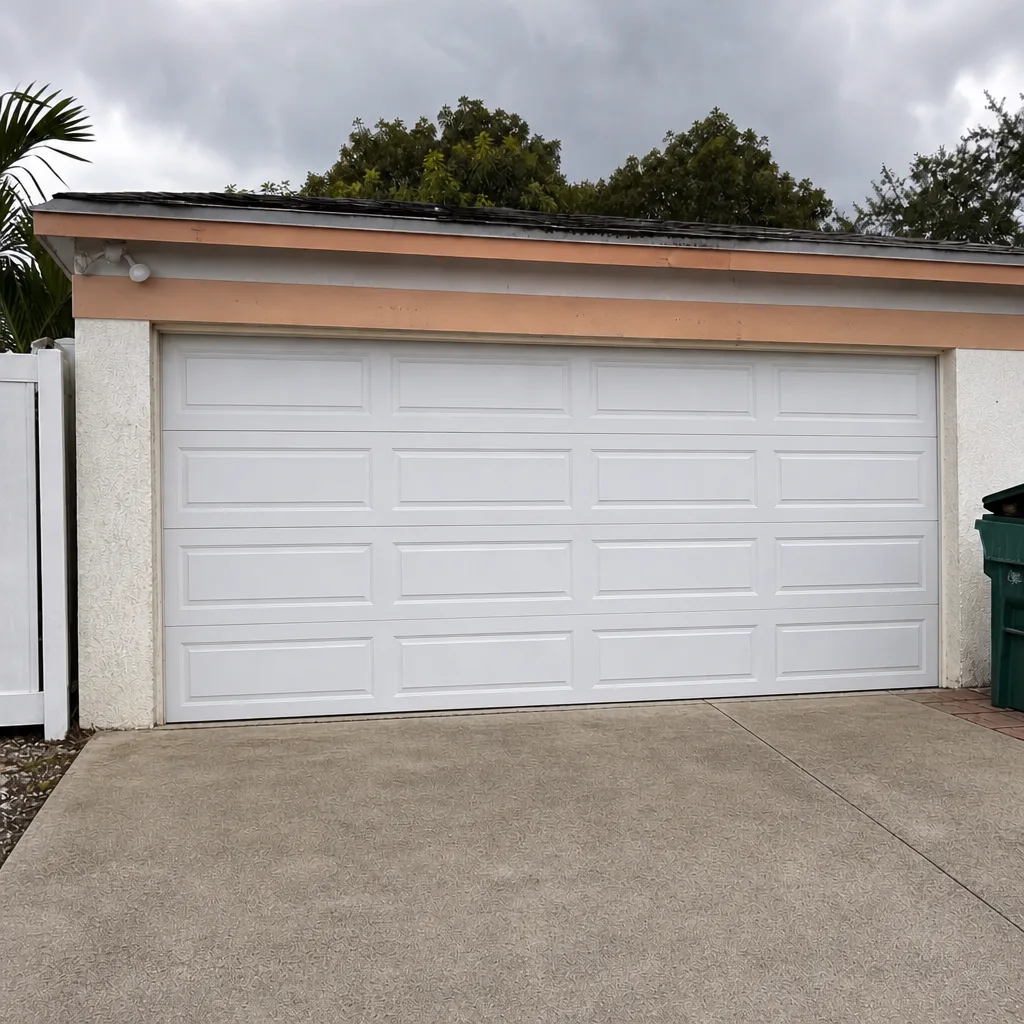
See the difference
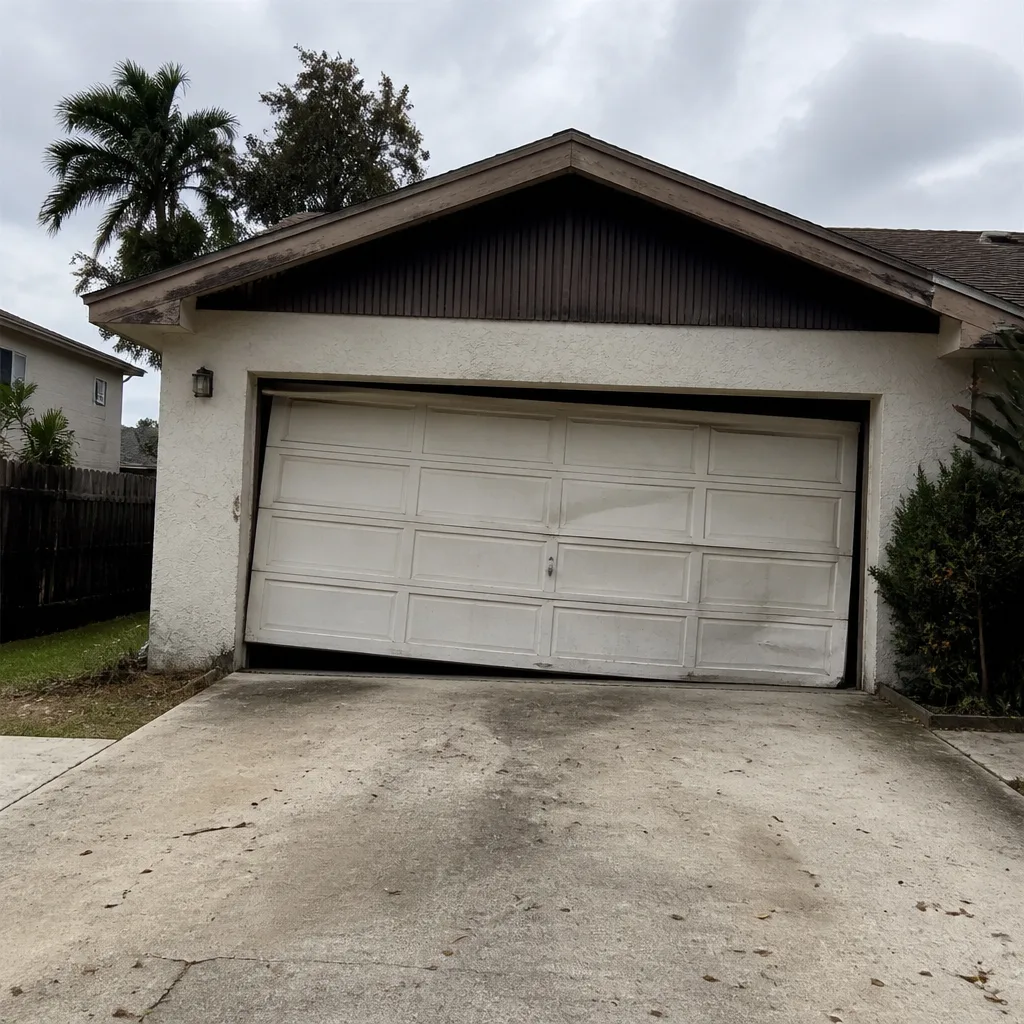 Before
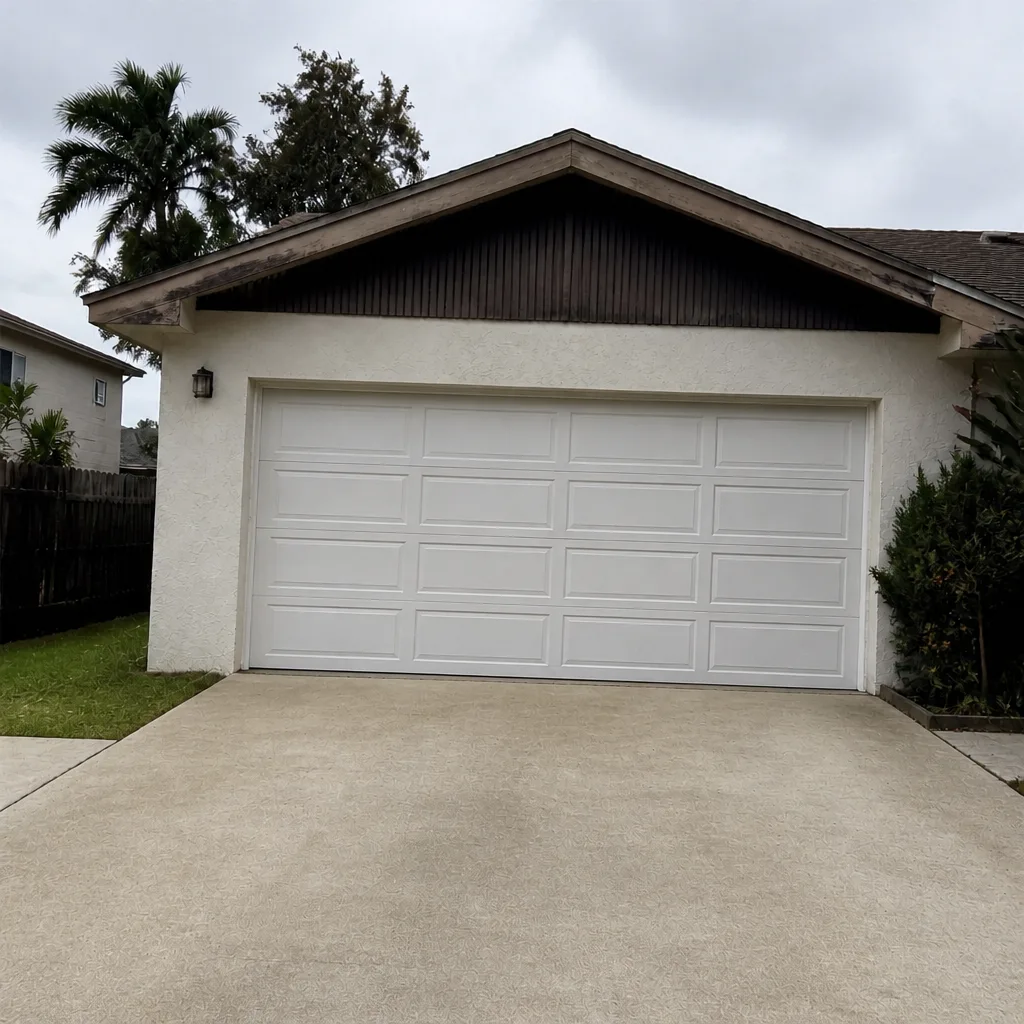 After
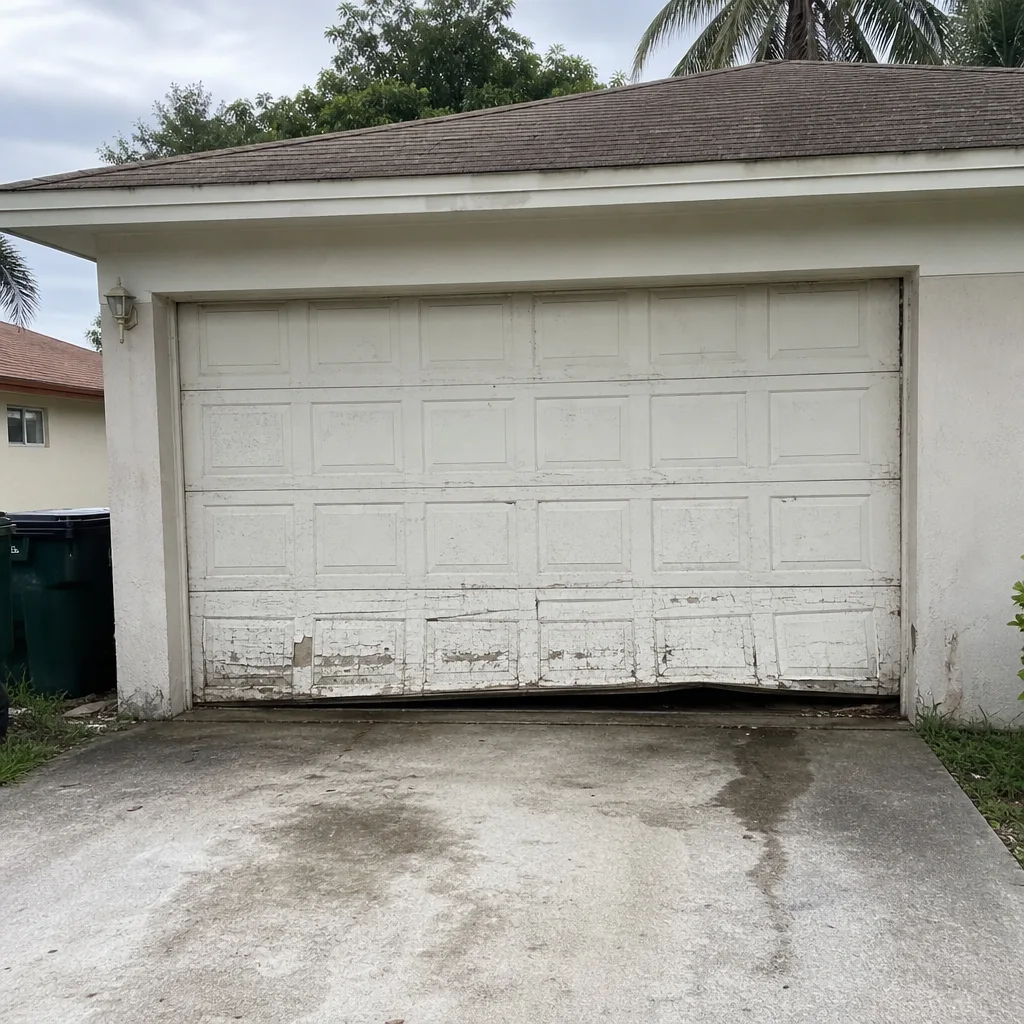 Before
 After
 Before
 After
When to Call a Professional
Call a professional when the job touches springs, cables, brackets, tracks, or structural panels. Also call when the door comes down unevenly, makes a loud bang, won’t open at all, has come off its track after a storm, or when the opener keeps reversing for no clear reason. And call if it’s your first time facing a broken spring; a snapped spring is not a “figure it out as you go” situation. Garage Door Repair Pembroke Pines Pros offers free estimates in Pembroke Pines, and we handle spring repair, opener repair, and full installation. Call (844) 443-4021 and get a written price before any work starts.
Frequently Asked Questions
No, you shouldn’t. A torsion or extension spring holds enough stored energy to cause serious injury, and the winding process requires professional winding bars and training. Spring replacement is the highest-risk job in garage door work, so call a technician. Call (844) 443-4021 for a free estimate.
It might be, and you should check with the local building department before starting. Garage door replacement can fall under Florida Building Code, and unpermitted work can create insurance and 4-point inspection complications. For a job that needs a permit, a professional installation keeps your records clean and your coverage intact.
It can. If a replacement wasn’t permitted and your insurer or a 4-point inspector catches the mismatch, it can create friction around a claim or a policy renewal. A proper permit trail is evidence the work was done to code. If you’re unsure whether past work was permitted, ask your building department and keep the paperwork handy.
Yes, in most cases. Pairing a remote or clearing old remotes is a reasonable DIY task, though the sequence varies by brand; LiftMaster and Chamberlain models differ from Genie, and older Craftsman and Wayne Dalton units have their own steps. If reprogramming doesn’t stick, the underlying issue may be mechanical rather than a programming problem.
Weatherstripping, sensor alignment, lubrication, tightening loose hinge bolts, and basic remote programming are the safely DIY-friendly tasks. Anything involving springs, cables, bottom brackets, structural panels, or a door that’s off track belongs with a professional.
Every job is priced by estimate, and the written price you agree to before work starts is the price you pay. The cost depends on the specific repair and your door system, so the reliable way to get an exact figure is a free estimate. Call (844) 443-4021 and we’ll give you a written quote before any work begins.
The Bottom Line
The DIY line on garage doors runs through springs, cables, brackets, and structural panels. Those parts are dangerous to work on, and in Pembroke Pines they also touch permit and insurance questions that make a DIY mistake more expensive than it looks. Weatherstripping, sensor alignment, lubrication, and basic remote programming are yours to handle. When a job crosses the line, use a garage door specialist rather than a generalist, get a written estimate before work starts, and keep the paperwork. The right fix, done once, protects your door, your home, and your coverage. If you’re not sure which side of the line a job falls on, a free estimate makes the decision easy. Take a look at garage door repair in Pembroke Pines or garage door repair for the full range of services, and call whenever you’re ready.
Call (844) 443-4021 today for a free estimate. We’re garage door specialists, not generalists, and we work on your brand.
Written by the team at Garage Door Repair Pembroke Pines Pros.